
About this project
Share Art Now!
SHARE NOW is a European car-sharing platform built on a single premise: that access to mobility should not require ownership. In 2020, the brand needed to extend beyond utility — to occupy a cultural position in the cities where it operates.
THE SITUATION
Corporate art patronage is among the most legible manoeuvres in brand strategy — and among the least convincing. The audience has seen this move before. They understand that the art is a vehicle. And when the art is literally a vehicle — painted on the side of a branded car — the risk of that reading collapses from risk to certainty.
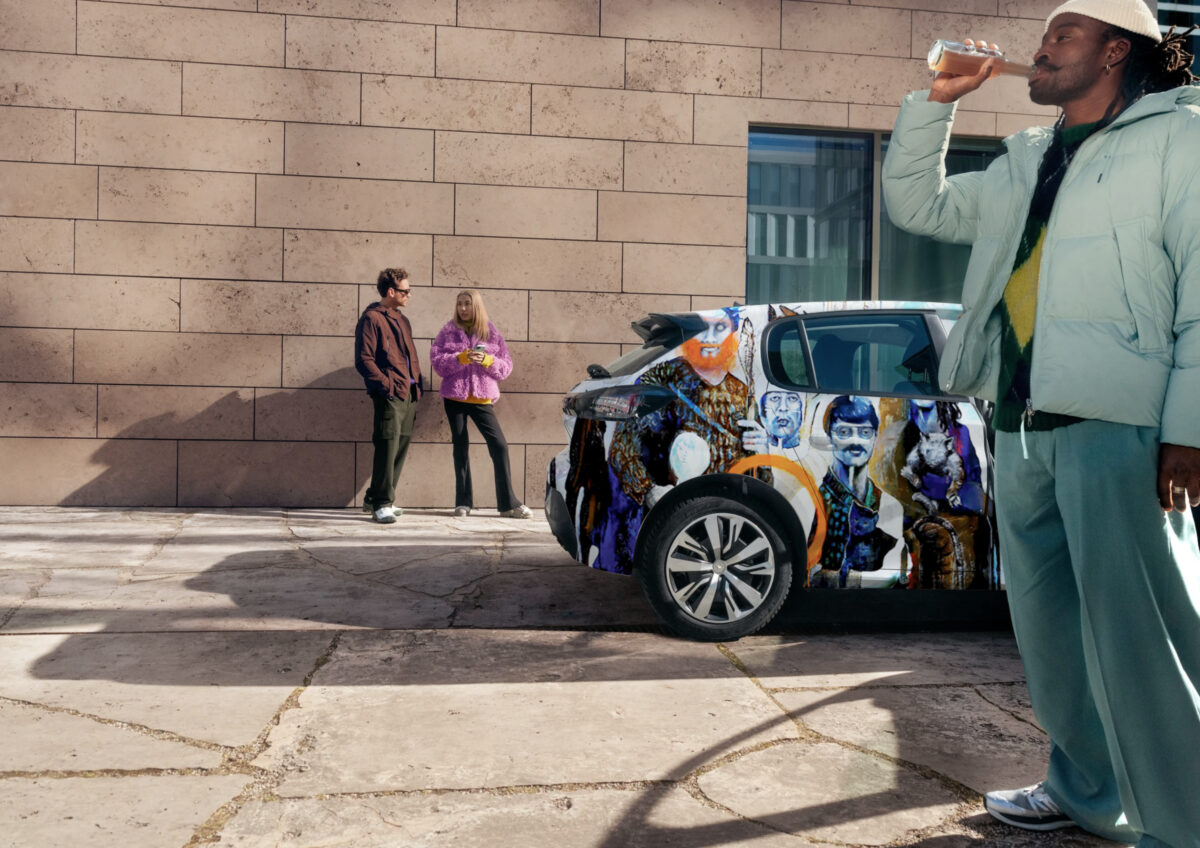
SHARE NOW had a structural advantage it had not yet recognised. The fleet already occupied the city. Every car was already a moving object in public space, already part of the visual experience of the street. The question was not whether to bring art into the brand — it was what the fleet had always been, and how to make that presence mean something.
Art-as-sponsorship decorates a brand. Art-as-infrastructure transforms one.
THE READING
The car-sharing model carries a latent cultural argument the mobility industry rarely makes explicit: that the city is a commons, and movement through it is a shared condition. SHARE NOW’s entire value proposition rests on the premise that the vehicle does not belong to you — it belongs to the network, to the city, to whoever needs it next. This is not just a business model. It is a position on what cities are for.
Contemporary art operates on related ground — concentrating cultural experience into protected institutional spaces, making art available to those who seek it out in designated locations. You go to the art. The art does not come to you.
Share Art Now identified the structural parallel and reversed the gallery’s logic. The fleet, already circulating through every neighbourhood, could become an exhibition that no one had to enter. The viewer does not select the encounter. The encounter selects the viewer.
THE DECISION
The central decision was one of naming — and it determined the entire cultural register of the initiative. Share Art Now was not decorative. It was a compressed argument: the same verb, the same logic, applied to a different object. Share a car. Share art. The language of the platform extended into the language of culture without translation — because the underlying value was identical. Access over ownership. Movement over possession. The city as something you inhabit together, not something you own alone.
This naming decision had structural consequences. It meant the initiative could not be a sponsorship — because sponsorship implies distance. Artists were collaborators in a platform logic, their work becoming part of the city’s visual commons in exactly the way a shared car becomes part of its mobility commons.
THE WORK
Creative concept, naming, and strategic framing. Brand narrative and key messaging. Visual and tonal direction for vehicle application, digital channels, and campaign communication. Scalable framework for long-term artist collaborations and fleet integration across European operating cities.
The concept was developed and pitched during the Covid lockdowns of 2020. It was received with interest and never produced — a timing problem, not a strategic one. In the years that followed, automotive brands arrived at remarkably similar conclusions about fleet, city, and cultural presence.
THE SHIFT
Share Art Now repositioned SHARE NOW from a convenience utility to a cultural actor with a coherent position on what cities are for. The fleet stopped being background. In each city, it would have become a circulating exhibition of local artistic production — work most residents would not otherwise encounter at that scale, moving through the streets they already move through. The artist gaining visibility at urban range. The brand gaining presence that registered as cultural fact, not cultural positioning. A distributed, moving exhibition that belongs to no single neighbourhood and passes through all of them.
And the user, walking down a street looking for a car, finding something they were not looking for: a reason to look.
In a sector where differentiation is fought on price and app experience, cultural authority is the only asset that compounds. A brand that understands the city as a shared space — and acts on that understanding — does not need to explain why it matters.
The concept was developed and pitched in 2020. It was not realised — the timing, during the first year of the pandemic, made the conditions for execution impossible. The thinking stands.