
25 Jun Not bored anylonger – how the apes inherited the biggest jewel on the chain
by Carolina Marchiori
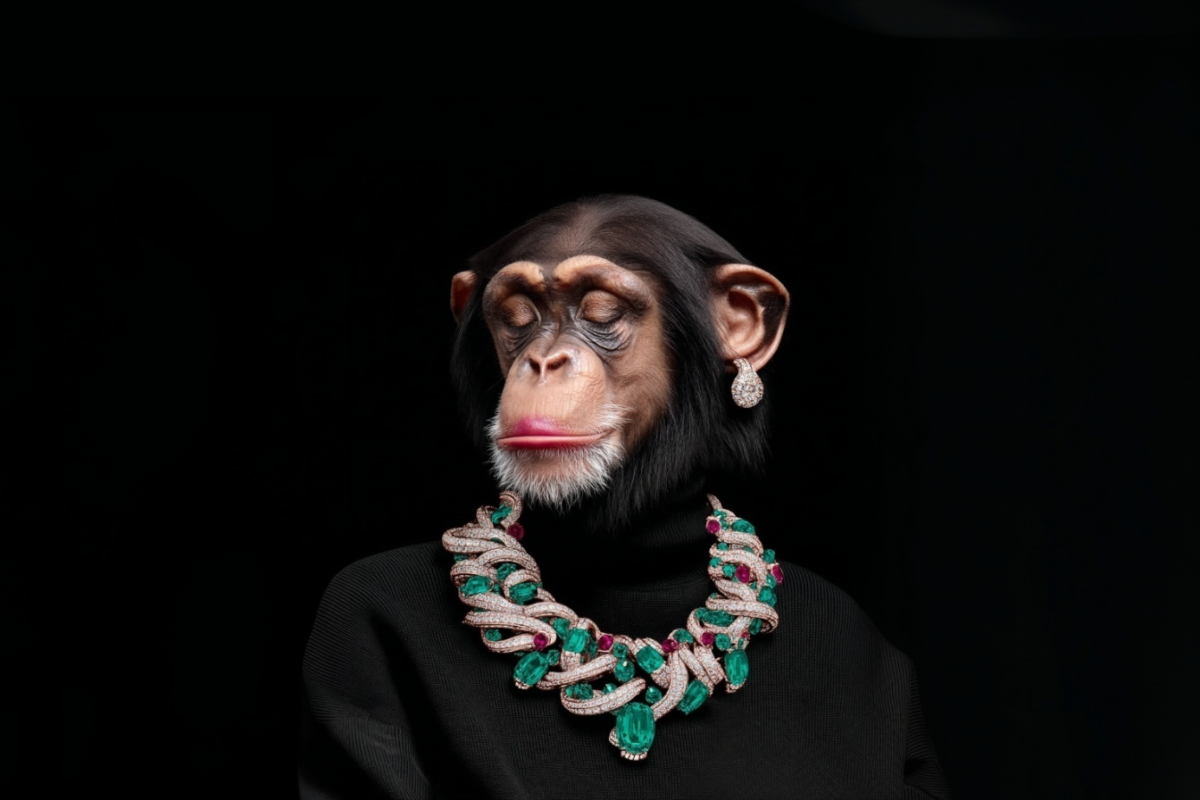
The ape, to be precise, is a JPEG: a unique, machine-generated cartoon image — one of ten thousand — whose ownership is recorded on a blockchain. The NFT, or non-fungible token, is not the image itself but the cryptographic certificate of ownership: a permanent entry, written in code, stored simultaneously across thousands of independent computers that no single party controls or can alter. When Bieber spent $1.3 million, he was buying that certificate — for a cartoon ape — in a market that had decided, briefly, that the certificate was the asset. It was not. The market eventually agreed.
The NFT market peaked in January 2022, when OpenSea alone processed nearly $5 billion in a single month. By 2025, total annual trade volume across the entire space had collapsed to approximately $5.5 billion — the full year matching a single strong month at the top. Approximately 96 percent of all NFT collections now show no meaningful trading activity. Nike closed RTFKT. NFT Paris 2026 was cancelled. The apes, the punks, the celebrity-backed drops: a market built on speculation dressed as culture, and it concluded the way all such markets do — with the speculation.
−95%
NFT TRADING VOLUME DECLINE FROM 2022 PEAK TO 2025 ANNUAL TOTAL
50M+
LUXURY PRODUCTS REGISTERED ON AURA BLOCKCHAIN CONSORTIUM ACROSS 40+ MEMBER BRANDS
+60%
PHYGITAL NFT TRANSACTION VOLUME GROWTH IN 2026 — THE FASTEST-GROWING SEGMENT IN THE SECTOR
Tiffany’s NFTiff — 250 bespoke pieces at 30 ETH each, manufactured to the exact traits of a holder’s CryptoPunk — compressed the specification document, commission brief, provenance record, and ownership certificate into a single on-chain artefact. The digital token was not a receipt for the physical piece. It was the piece, held in a different register. Louis Vuitton’s VIA Treasure Trunk at €39,000 functioned as a permanent membership key to an evolving suite of physical drops — each arrival deepening the relationship rather than concluding it. In both cases, the object and the token were not parallel. They were one thing that existed in two places.
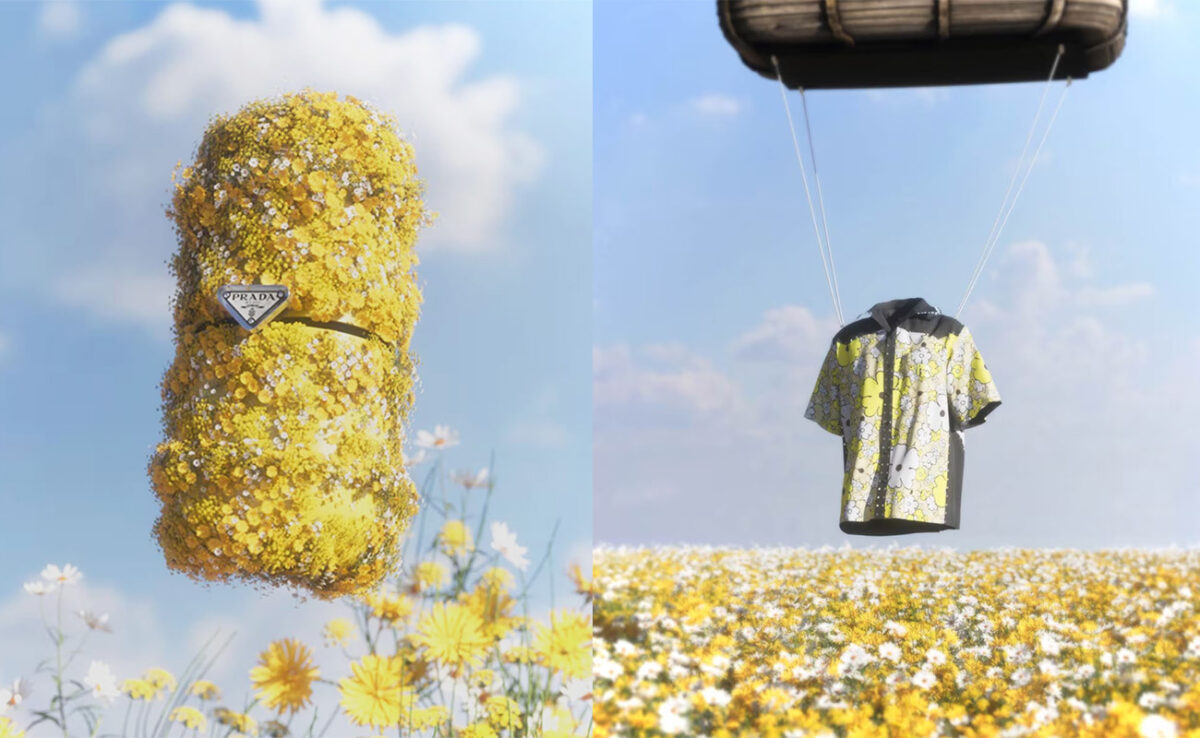
What the surviving luxury blockchain programmes have in common is that they were never primarily about the NFT market. Prada’s Timecapsule was a monthly limited-edition drop since December 2019 — the NFT was added in June 2022 because it deepened the ownership record and enabled a community layer through Prada Crypted, not because it accessed a speculative market. The Aura Consortium was not built to sell digital art. It was built to solve the authentication and traceability problem that has defined luxury’s relationship with counterfeiting, resale, and supply chain opacity for decades. These are not collectibles. They are product records. And product records, unlike cartoon apes, appreciate with the thing they describe.
We believe in a future where every customer feels connected to the story behind their products, and the DPP is the key to unlocking that narrative.”
— Romain Carrere, CEO, Aura Blockchain Consortium
Tiffany’s NFTiff — 250 bespoke pieces at 30 ETH each, manufactured to the exact traits of a holder’s CryptoPunk — compressed the specification document, commission brief, provenance record, and ownership certificate into a single on-chain artefact. The digital token was not a receipt for the physical piece. It was the piece, held in a different register. Louis Vuitton’s VIA Treasure Trunk at €39,000 functioned as a permanent membership key to an evolving suite of physical drops — each arrival deepening the relationship rather than concluding it. In both cases, the object and the token were not parallel. They were one thing that existed in two places.
What the surviving luxury blockchain programmes have in common is that they were never primarily about the NFT market. Prada’s Timecapsule was a monthly limited-edition drop since December 2019 — the NFT was added in June 2022 because it deepened the ownership record and enabled a community layer through Prada Crypted, not because it accessed a speculative market. The Aura Consortium was not built to sell digital art. It was built to solve the authentication and traceability problem that has defined luxury’s relationship with counterfeiting, resale, and supply chain opacity for decades. These are not collectibles. They are product records. And product records, unlike cartoon apes, appreciate with the thing they describe.

The EU’s Digital Product Passport regulation makes the direction explicit at the legislative level. Romain Carrere, CEO of Aura, has described what this means in practice: European customers accessing the digital record on their Louis Vuitton handbag or Dior jacket will have a secure on-chain portal giving them proof of authenticity, access to loyalty programmes, warranty management, and insurance options — all tied to a permanent, non-manipulable ownership record. This is not a Web3 feature. It is a compliance mechanism that happens to use blockchain as its foundation. The technology has become invisible — which is precisely the sign that it became structural. No one talks about HTTP when they load a web page.
Phygital transaction volume grew 60 percent in 2026. Luxury fashion’s blockchain segment reached an estimated $890 million. The Aura ecosystem now holds 30 million products across 40 brands. These are not the numbers of a dead technology. They are the numbers of a technology that shed its speculative layer and reached the problem it was always best suited to solve.
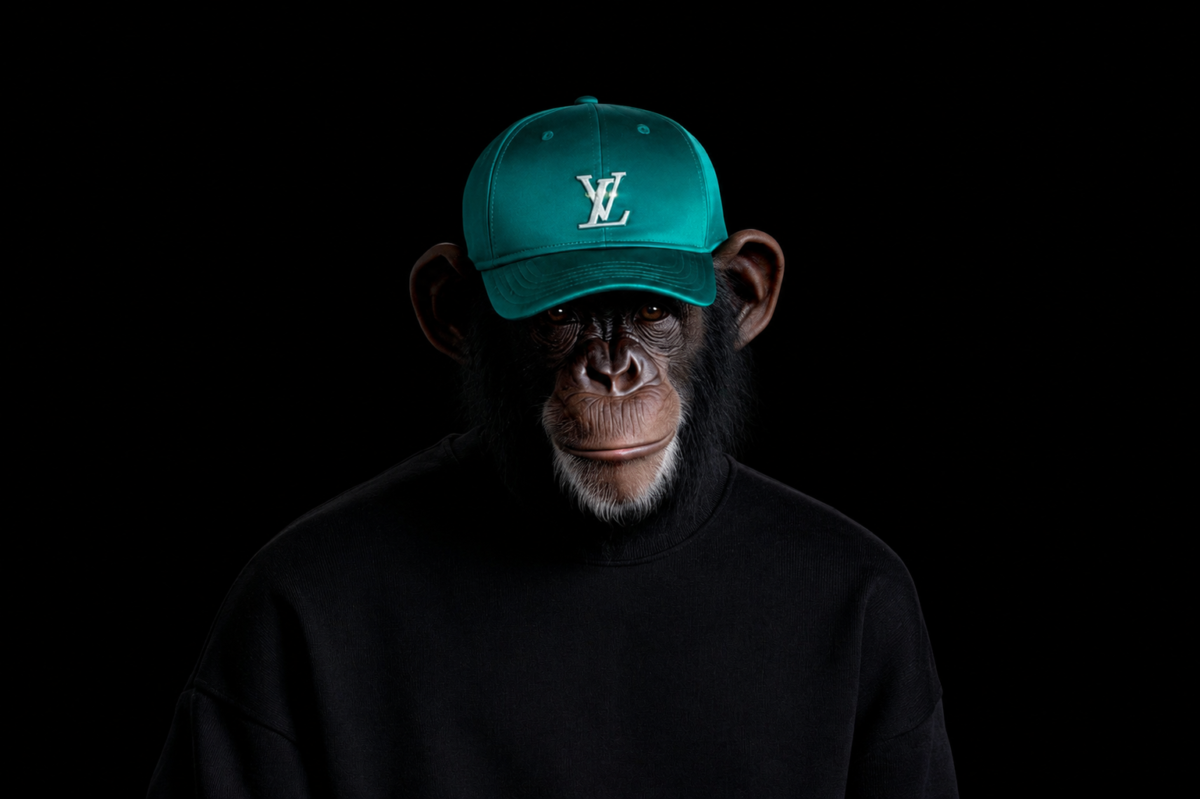
The Bored Apes asked: what is this image worth as an asset? It was always the wrong question — and the market answered it correctly. The phygital asks something else entirely: what does it mean to own something that exists in two registers simultaneously, material and on-chain, and what does a brand owe the person who holds both?
That second question is not a technology question. It is a brand question. A Bored Ape had no history before the moment someone paid for it. A Bulgari Serpenti carries a century of accumulated meaning — the sketch, the stone, the hand that set it, the house that named it. The chain does not make that meaning. It makes it impossible to lose.
The apes were certificates for nothing. Somewhere in the metaverse, one of them is presumably still wearing a sailor hat. Most have reportedly taken it well — surrounding themselves with precious phygitals instead.
Not bored at all.
REFERENCES AND SOURCES
- Justin Bieber, Bored Ape Yacht Club NFT #3001. Purchased January 2022 for 500 ETH (approximately $1.3 million). Current value as of 2026: approximately $12,000 — a loss of over 99%. Decrypt, February 2026. Futurism, February 2026.
- OpenSea peak trading volume: approximately $5 billion in January 2022. DemandSage, NFT Market Statistics 2025. Colexion, NFT Market Size & Trends 2026.
- Phygital NFT transaction volume growth of 60% in 2026. Fashion NFTs valued at $890 million. Colexion, NFT Market Size & Trends 2026.
- Aura Blockchain Consortium. Co-founded by LVMH, Prada Group, and Cartier. Now exceeds 50 million products registered across 40+ luxury brands — including Bulgari, Dior, Loro Piana, Prada, Rimowa, Maison Margiela. Business of Fashion, August 2025. WWD, September 2024. Aura Blockchain Consortium.
- EU Digital Product Passport regulation. Part of the Ecodesign for Sustainable Products Regulation (ESPR), rolling out for apparel and textiles from 2026. Flawless Magazine, May 2025.
- Prada Timecapsule. Monthly limited-edition NFT drops running continuously since December 2019. Prada Crypted community layer added June 2022. Prada official.