
22 Jul From Italy with Love
by Carolina Marchiori
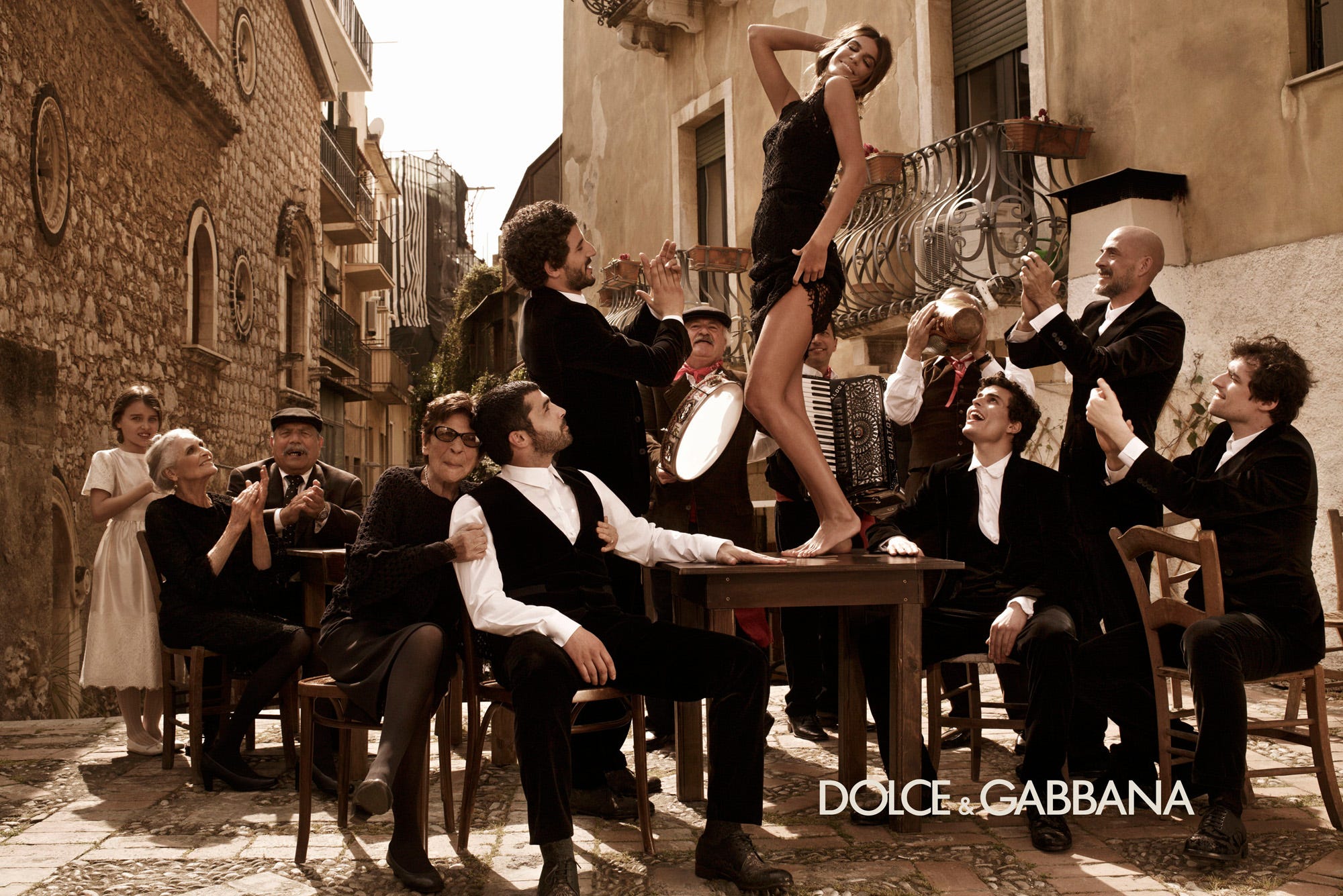
Made in Italy is what happens when that standard becomes an industrial system. Six hundred years of accumulated knowing — silk from Como, leather from Florence, tailoring from Naples — built so deeply into daily life that the making and the living became indistinguishable.
The danger is to sell it out like a plastic gondola souvenir. The postcard version of heritage sold to those who will never know the difference — until the copy outlasts the original. Italy has one of the most powerful commercial reputations in the world: five centuries of cultural capital that can be liquidated surprisingly fast when the object and the system that made it meaningful come apart. The temptation is to trade on the image of what was true rather than the practice of what still is. That is also a question of trust — and trust, unlike silk, cannot be woven on demand.
Italy’s relationship to its own creative legacy is officially codified in Made in Italy Day — observed on April 15, Leonardo da Vinci’s birthday, its symbol the Vitruvian Man, established by Law 206/2023. That Italy chose an engineer-artist-anatomist-architect as the patron of its commercial identity is not incidental. A global study by KPMG, one of the world’s four largest auditing and advisory firms, places Made in Italy among the three most recognised brand identities on earth — alongside Coca-Cola and Visa — with a recognition rate exceeding 90% in key markets. The question the designation raises is not whether the brand is valuable. The question is whether the system behind it is still being protected.
75%
OF GLOBAL CONSUMERS PREFER MADE IN ITALY PRODUCTS
€70 billion
Italian fashion exports, 2024, broader definition including accessories and leather goods.
74%
OF US AND UK CONSUMERS ARE WILLING TO PAY A PREMIUM FOR ITALIAN GOODS
The formal designation of Made in Italy emerged in the 1980s, anchored to what the industry called the Four A’s: abbigliamento, agroalimentare, arredamento, automobili — fashion, food, furniture, cars. It was a trade instrument, designed to differentiate Italian production from the industrialized mass manufacture gaining ground elsewhere. But the label was already containing something a label cannot hold: a geography of knowledge.
The distretti produttivi — the production districts — are the structural fact that explains why Made in Italy resists reduction to a compliance mark. So far. Como’s silk producers. Brianza’s furniture industry. Le Marche’s shoe specialists. Tuscany’s textiles. These are not industrial clusters in the conventional sense. They are territories where knowledge accumulated over generations without a management system, without intellectual property frameworks, without anyone deciding it should be preserved. The knowledge stayed because the people stayed. The people stayed because the work was there. The work was there because the territory had made a particular kind of excellence possible. Work and Territory are inseparable from the culture — and the culture from the way Italians lived. And this is where il cane si morde la coda — the dog bites its tail.
The phrase la bella figura — the beautiful figure, the well-presented self — does not refer to physical attractiveness. It refers to the total quality of how one moves through the world: how one enters a room, how one speaks, how one dresses, how one eats. A complete aesthetic discipline applied to ordinary life.
Italian craft is a system experienced from the inside out and the outside in, like a jacket you can wear on both sides. The Comasco silk-weaver, the Florentine leather-cutter, the Neapolitan tailor: these are not people who go home to a different life after the atelier closes. The aesthetic attention that governs what they make governs also how they set the table at lunch, how they dress on a Sunday, how their courtyard gate is proportioned. The people of Italy do not simply produce the culture they inhabit. They live it.
The origins of Made in Italy are not administrative. They are ecological. In the fifteenth century, Ludovico Sforza, Duke of Milan, ordered the planting of mulberry trees across the Lombard plain to sustain silkworm cultivation. The city of Como — already a centre of woollen production since the Middle Ages — became within two generations the silk capital of Europe.
“Italian fashion sells culture before textile or leather. We produce culture. For this reason we are extraordinary producers of extraordinary product that would be ordinary otherwise.” — Marco Bettiol
Today, Como produces approximately 70 % of Europe’s finest printed silk fabric. Armani, Versace, Ferragamo, and Gucci source from the same lake district. The supply chain has remained functionally local — from silkworm to finished silk within the same geography — for five hundred years. Not heritage preservation. An unbroken industrial ecosystem.
In Florence, the material changes but the logic is identical. The Oltrarno leather tradition — tanning and working on the south bank of the Arno — traces to the guild economy of the Medici. The Scuola del Cuoio, the Leather School founded in 1950 inside the Basilica di Santa Croce, was established in a former Franciscan sacristy, with monks and craftsmen teaching side by side. Salvatore Ferragamo moved his atelier from Hollywood to Florence in 1927, drawn by what he described as the density of artisans capable of realising the shoes he was designing. Gucci opened its first shop on Via della Vigna Nuova in 1921, selling leather goods to the Florentine equestrian set. Not brand origin stories. Records of a city whose commercial and artistic production were always the same thing.
In Naples, the same principle took the form of the suit. Neapolitan tailoring — what the Germans call Schneiderkunst, the art of the tailor — is not simply a production tradition. It is a philosophy of the dressed body. The Neapolitan jacket is unstructured: no internal canvas, no shoulder padding, built to move with the body rather than impose shape upon it. The lapel rolls naturally. The breast pocket is cut on a curve — the barchetta, the little boat — which no machine replicates exactly. The sleeve is hand-sewn with a slight gather at the shoulder, the “shirt-sleeve” construction that signals Neapolitan provenance to anyone trained to read it.
Houses like Kiton, founded by Ciro Paone in 1968; Attolini, active since 1930; Rubinacci, established on Via Chiaia in 1932: not brands in the conventional sense. Schools of thought, dressed as jackets. The cultural philosophy behind them has a name Baldassare Castiglione gave it in 1528, in Il Cortegiano: sprezzatura. The art of making the difficult appear effortless. Applied to dress, it produces the unlaundered linen shirt, the loosened tie, the deliberate imperfection that signals mastery rather than carelessness.
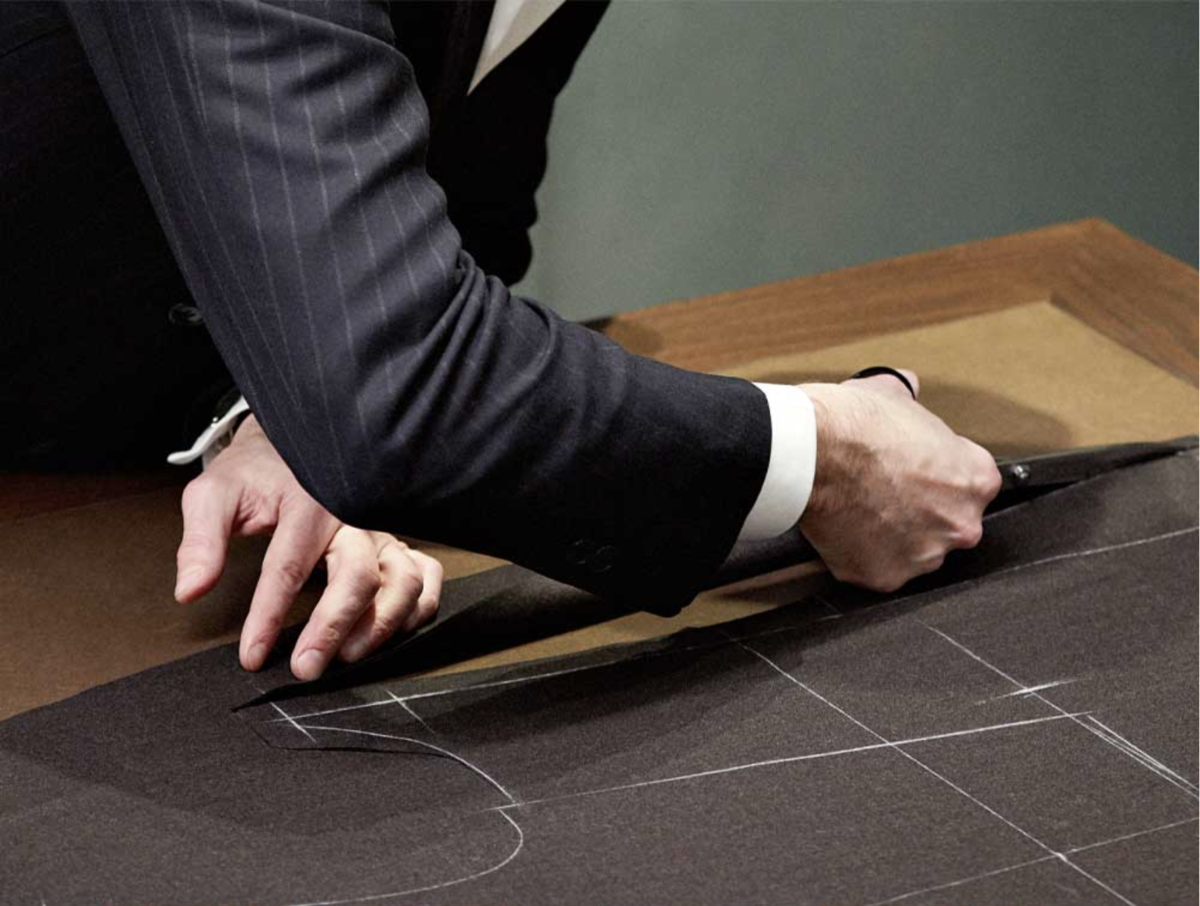
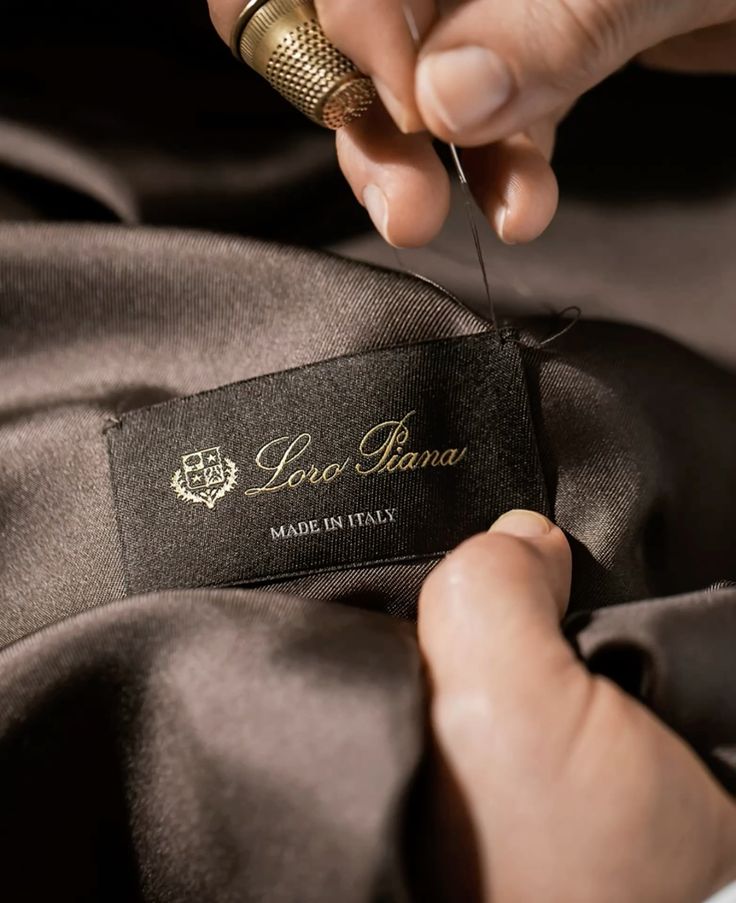
© Zegna, © Loro Piana
And beneath sprezzatura, at a deeper cultural register, is what Federico Fellini’s camera recorded in 1960: la dolce vita.
The sweet life. Not as aspiration but as operative philosophy. Via Veneto at midnight. The table that receives the same attention as the boardroom. The conviction — operative in Italian culture long before it became an export concept — that beauty is not a luxury allocated to leisure. It is an obligation of the everyday. The phrase la bella figura — the beautiful figure, the well-presented self — does not refer to physical attractiveness. It refers to the total quality of how one moves through the world: how one enters a room, how one speaks, how one dresses, how one eats. A complete aesthetic discipline applied to ordinary life. This is where the contemporary threat lies — not in imitation, but in internalization. When Made in Italy becomes a provenance box to check rather than a cultural logic to embody, the label survives while the value it pointed to quietly dissolves.
The object without the culture is just an object. The label without the system is just a label.
“What you wear is how you present yourself to the world, especially today,
when human contacts are so quick. Fashion is instant language.”— Miuccia Prada

The idea that the object and the conditions of its making are not separable, that you cannot have one without the other without losing what the consumer came to buy. As Stefano Micelli writes: “We have overvalued our brains for too long and now we have discovered that we have hands — and using them can be satisfactory, meaningful, fulfilling, and makes us intelligent.” Immanuel Kant said it in three words. “Hands are the window onto the mind.”
Whether that transmission holds in a market that increasingly attaches Italian labels to objects made in conditions that share nothing with the districts of Como or the ateliers of Florence — that is the question the label cannot answer for itself. The visceral factor cannot be manufactured. That is either the most defensible competitive position in global fashion, or the most endangered one. Possibly both, simultaneously, which may be the most Italian condition of all.
The labour exploitation investigations of 2025 and 2026 represent the most acute structural threat to the Made in Italy system — not because they reveal hypocrisy (though they do), but because they reveal the precise mechanism by which a cultural system can be hollowed out from within while the label remains intact.
In December 2025, Italian prosecutors documented the exploitation of Chinese migrant workers at subcontractors of thirteen luxury fashion companies. Earlier judicial administration orders had involved production units of major luxury houses after Milan prosecutors uncovered exploitative subcontracting networks in the production of luxury leather goods. A voluntary agreement signed in May 2025 introduced a centralised supplier registry and transparency certifications — but critics noted it lacked legal enforceability, wage protections, and mandatory participation.

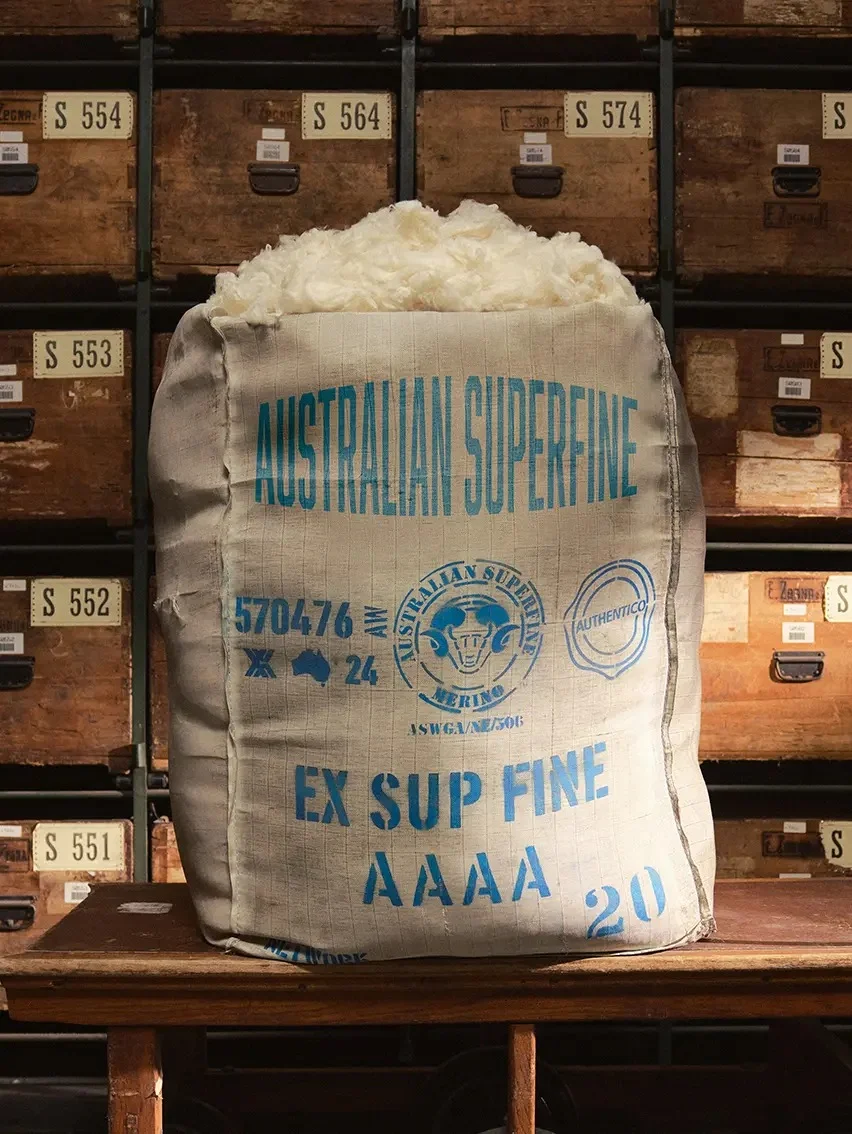
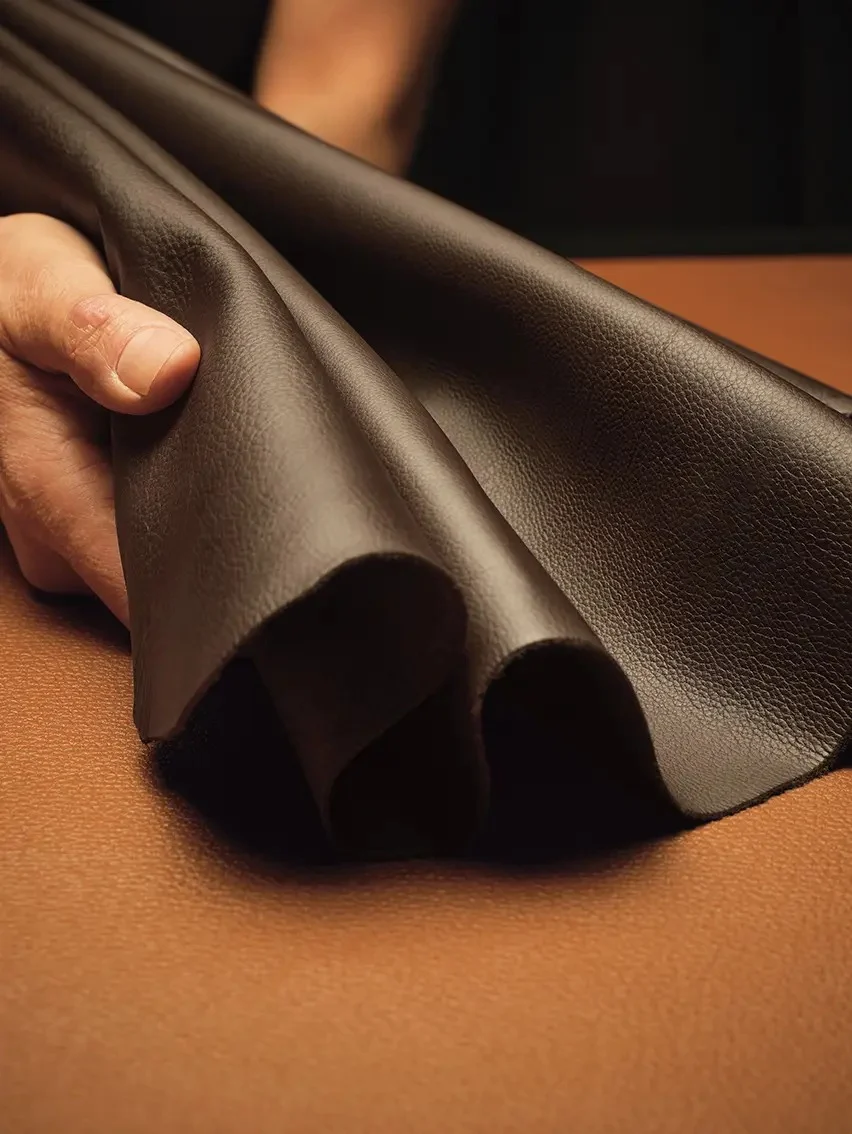
Craftsmanship is not a detail at Zegna – it’s a founding principle. For more than a century, Zegna has blended artisanal mastery with relentless innovation to create garments that embody purpose, precision, and elegance. © Zegna
This is the structural irony: the label that was created to signal the conditions of Italian production is being applied to objects produced in conditions that violate the cultural premise of the label. The distretti model — small, flexible, family-run, knowledge-dense — is being replaced, at the subcontracting level, by labour arbitrage under Italian jurisdiction. The geography is Italian. The system is not.
There is a quieter threat running alongside the subcontracting scandals: the artisans themselves are leaving. Workshops in Romania, Bulgaria, and increasingly Portugal have spent a decade recruiting Italian-trained craftspeople — pattern cutters, leather workers, embroiderers — offering wages and conditions that Italy’s fragmented, often family-operated districts struggle to match. The saper fare does not disappear when an artisan relocates; it travels with them. If the knowledge decouples from the territory, Made in Italy becomes precisely what its critics already suspect it of being: a stamp, not a system.
The European Digital Product Passport — mandated for textile and fashion products under the Ecodesign for Sustainable Products Regulation (ESPR), adopted in 2024 and currently being phased in toward full compliance from 2027 — is the structural mechanism this reckoning requires. Each garment must carry a verifiable digital record of its material composition, country of manufacture, supplier chain, and end-of-life guidance. For the consumer, a transparency tool. For the industry, a legal mirror. For Made in Italy specifically: the moment when the claim must become the proof. The brands that have invested in genuine supply chain integrity — that source from the distretti, maintain direct relationships with their artisans, and can produce a documented chain of custody from raw material to finished object — will find the DPP a competitive advantage. Their cultural claim, which has always been real, becomes verifiable. The brands that have been hollow-labelling will face the choice between compliance and exposure.
What Made in Italy must protect, and what no regulatory framework can substitute for, is the visceral factor itself: the carnality between object as the foundational condition of Italian fashion’s global desirability. This is not a legal concept. It is not a supply chain standard. It is a relationship between a way of making and a way of living that has been refined over centuries, and that produces objects which carry cultural density as a structural property rather than a marketing claim.
The brands that will sustain Made in Italy as a meaningful signal — rather than a label of convenience — are the ones that treat the system as the product: that invest in the districts, in the knowledge transfer, in the relationship between designer and artisan, in the transmission of saper fare across generations. Brunello Cucinelli does this in Solomeo, where he rebuilt a medieval village around a working atelier; the Zegna family has done it for four generations in the Biella wool district; Bottega Veneta does it through the Scuola dei Maestri Pellettieri in Vicenza, where intrecciato is taught as a living discipline rather than a technique to be archived. The Fondazione Altagamma exists precisely to argue for this position at the industry-policy level.
The concept “Made in” has never been merely administrative. Behind every origin label is a claim about trust, quality, and cultural meaning — an implied promise that the object in question belongs to a system capable of producing it at a certain standard. Italy understood this before any government policy formalised it. What is now emerging, in several distinct geographies, is a generation of countries that are beginning to understand the same thing — though from different starting positions, at different speeds, and with different raw materials.
The question worth asking is not whether these emerging “Made in” identities will challenge Italy. Some already do. The more structurally interesting question is: what do they need to build that Italy already has, and what does Italy risk losing that no regulatory framework can recover?
“The label without the system is just a label. The object without the cultural density is just an object. Remove the culture, and you are left with textile and leather — competent, unremarkable, available everywhere.”
Made in Japan — The Parallel Model
Japan has come closest to building a cultural-industrial equivalent. Regional atelier clusters, knowledge transmitted through apprenticeship, wabi-sabi encoding value in imperfection rather than conspicuous perfection — the structural parallels with Italy are precise. Where it diverges is in its relationship to self-narration: Japanese luxury resists the story and trusts the object to carry its own evidence. That produces extraordinary craft and historically underpowered global brand value. The brands that have crossed over — Issey Miyake, Comme des Garçons, Yohji Yamamoto — did so by exporting the philosophical position, not the production district. The next generation is learning to do both.
Made in Portugal — The European Challenger
Portugal positioned itself as the quality alternative within Europe at the exact moment Italy’s supply chain came under judicial scrutiny — a strategically intelligent move. Gucci, Massimo Dutti, and Zara source from manufacturing clusters in Braga and Porto. The product credibility is real. What Portugal does not yet have is the visceral factor: the storytelling infrastructure, the archival mythology, the cultural transmission system that makes an object feel irreplaceable rather than merely excellent. It is building toward it, in sustainability and circular production, with enough institutional support that the story is beginning to stick.
Made in India — Scale, Craft, and the Paradox of Visibility
India’s position is simultaneously the most promising and the most structurally complex. The textile heritage is extraordinary — Varanasi silk, Kashmiri shawl-weaving, the embroidery traditions of Lucknow and Kutch — and Indian artisans have been embroidering Parisian couture for decades without attribution. Riccardo Carduso — an Indian luxury brand founded by Adnan and Faizan — chose an Italian name deliberately. So did Massimo Dutti, which is Spanish. Both understood what the market reads in Italian signifiers: quality, taste, authority. This is the third threat to Made in Italy, quieter than exploitation or artisan emigration, but potentially more corrosive: when the code can be borrowed by anyone, it eventually belongs to no one. The challenge is not craft. It is the institutional infrastructure that makes craft legible as valued origin: the fashion weeks, the critical press, the apparatus that transforms a culture of making into a recognised cultural system. Sabyasachi is doing this at the domestic luxury level with considerable force. The international translation is still forming.
Made in Morocco — The Nearshore Contender
Morocco is building on proximity and logistics: duty-free EU access, three days by sea, a workforce with genuine textile manufacturing experience. The cultural layer is beginning to develop — zellige, Berber textile traditions, the leather tanneries of Fez — but the fashion world has not yet built the vocabulary to translate Moroccan craft into luxury brand value at scale. The structural question is whether Morocco chooses the production path (scalable nearshore manufacturing for European brands) or the origin path (building Made in Morocco as a cultural signal). Not incompatible strategies. Different timelines.
Made in Mexico · Made in Peru — Latin America’s Artisan Emergence
Latin America has the raw material and the infrastructure gap. Mexico’s handicraft tradition — Zapotec rugs, Oaxacan handwoven textiles, Taxco silver — carries a visual identity that is increasingly desirable at a global scale. Peru has something rarer: materials that are simply irreplaceable. Vicuña fibre, rarer than cashmere, whose production is inseparable from the Andean communities that have managed it for centuries. Object and territory materially inseparable — the visceral factor in its most literal form. The gap is not in what exists. It is in the story, the distribution, the apparatus that makes the world understand why it matters.
Made in Vietnam · Made in Ethiopia — The Trajectory Countries
Vietnam and Ethiopia represent the trajectory end of the spectrum: countries where the value proposition is currently production capacity and cost, with cultural identity still forming. Vietnam’s USD 46 billion in 2025 apparel exports make it the world’s second-largest exporter after China — a scale built on competitive cost rather than cultural meaning. Ethiopia has extraordinary craft heritage, particularly in handwoven cotton and shemma cloth, that has not yet been brought into productive relationship with its industrial capacity. The path from manufacturing designation to cultural signal is possible. It has simply not yet been walked here.
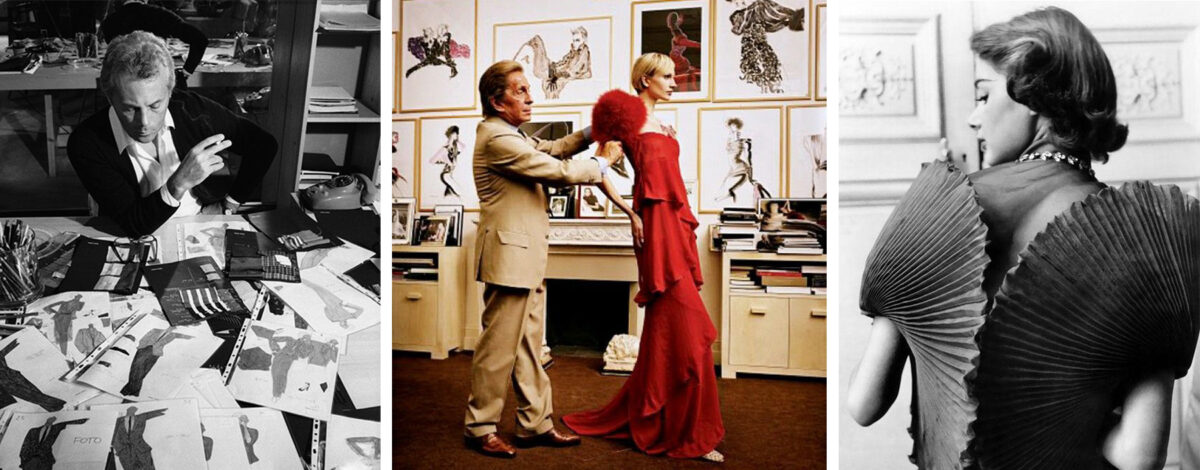
Giorgio Armani in his Milan studio, reviewing collection sketches, c. 1980. Photographer unknown. Valentino Garavani in his atelier, adjusting a red evening gown — the colour that became an industry unto itself. Photographer unknown. Elsa Schiaparelli, pleated fan sleeve dress, 1951. Photographer unknown.
For the emerging “Made in” countries, the lesson of Italy is not about heritage — it is about the decision to invest in cultural transmission before the market demands it. Portugal is making this investment now, in sustainability and circular production, with sufficient institutional support that the story is beginning to stick. India is at the threshold of it, with the cultural raw material present but the institutional infrastructure still thin. Japan has a parallel system that has never fully translated its cultural density into global commercial value at the Italian scale, which represents both a limitation and an opportunity.
Morocco, Mexico, Peru, Vietnam, Ethiopia — each of these has craft traditions of genuine depth and global distinctiveness. What separates a tradition from a brand is the decision to build the apparatus that makes the tradition legible, desirable, and commercially sustainable. That apparatus includes fashion weeks, critical press, institutional patronage, export infrastructure, and — most importantly — the stories that make the object feel irreplaceable. Italy built that apparatus over four decades. The emerging “Made in” countries are building it now.
The future of Made in Italy, in this light, is not a competition with these emerging identities. It is a challenge from within: to protect the system that the label was created to represent, to close the gap between what the label claims and what the production conditions actually are, and to continue generating the cultural density that makes Italian fashion irreducible to mere manufacturing. The visceral factor is not guaranteed. It has to be renewed — in every atelier, every district, every relationship between a designer’s idea and the hand that realises it.
Kant wrote that the hand is the window onto the mind. What Made in Italy has always understood — instinctively, without needing to theorise it — is that the hand is also the window onto the culture. Every object that leaves an Italian district carries that evidence: of how people live, what they value, how they relate to time and material and each other. What remains to be seen is whether Italy will keep signing its postcards — not with a compliance certificate or a digital ledger, though those matter too, but with a handwritten note, a personal thought, with saper fare — and amore.
REFERENCES AND SOURCES
- Bettiol, M. (2014). Raccontare il Made in Italy: Un nuovo legame tra cultura e manifattura. Marsilio.
- Bain & Company. (2024). Luxury in transition: Securing future growth. https://www.bain.com/insights/luxury-in-transition-securing-future-growth/
- Business of Fashion / McKinsey & Company. (2025). The State of Fashion 2025: Challenges at every turn. https://www.mckinsey.com/~/media/mckinsey/industries/retail/our%20insights/state%20of%20fashion/2025/the-state-of-fashion-2025-v2.pdf
- Confindustria Moda / ISTAT. (2024). Italian fashion and textile export data. https://us.fashionnetwork.com/news/Confindustria-moda-slowdown-in-italian-fashion-exports-in-the-first-seven-months-to-21-7-billion,1782912.html
- Fondazione Altagamma. (2024). 23rd Altagamma Monitor. https://altagamma.it/media/source/3b.%20PRESS%20RELEASE_%20ALTAGAMMA%20MONITOR%202024.pdf
- KPMG Italia. (2012). Made in Italy: Terzo brand più conosciuto al mondo [internal industry study; no public URL available; widely cited in trade press].
- Micelli, S. (2011). Futuro Artigiano: L’innovazione nelle mani degli italiani. Marsilio.
- Oliver Wyman. (2025, November). Why Japan’s luxury market is a rising investment opportunity. https://www.oliverwyman.com/our-expertise/insights/2025/nov/japan-luxury-market-investment-opportunity.html
- Tartaglia, A. (2026, July). Fashion industry: Key roles and success factors of Made in Italy [Lecture]. MA in Luxury and Fashion Management, Rome Business School.
- The Fashion Law. (2025, December). Italy targets fashion’s dirty secret: Labor abuses in luxury supply chains. https://www.thefashionlaw.com/italy-targets-fashions-dirty-secret-labor-abuses-in-luxury-supply-chains/