
20 Jul The new Rupture of the Microquakez
by Carolina Marchiori
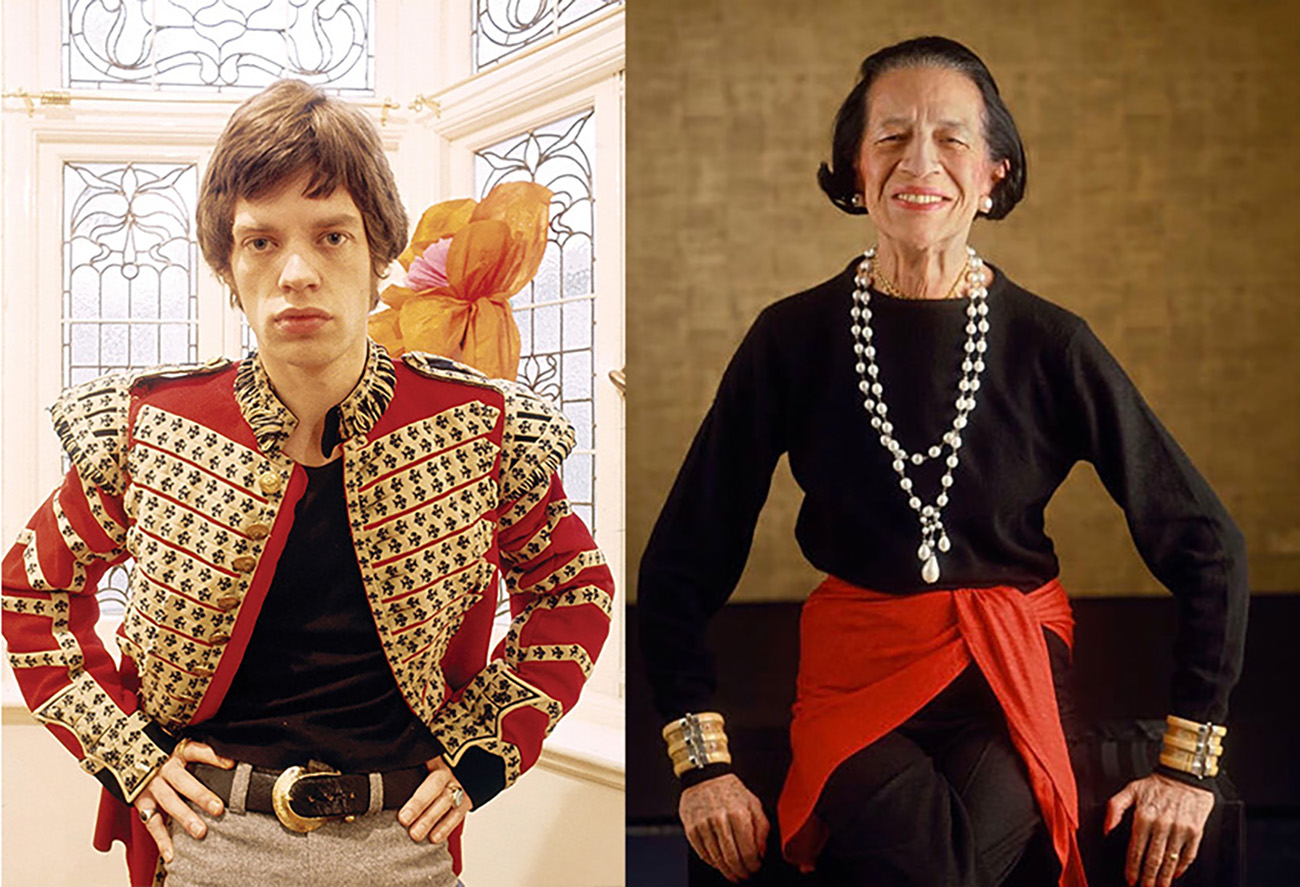
Left: Mick Jagger for Observer Magazine 1967 © Colin Jones
Right: Diana Vreeland © Evelyn Hofer
Diana Vreeland coined the word in 1965. Youthquake.
One word, one wave, one generation that moved through culture with the force of a geological event — and left the earth permanently rearranged.
The miniskirt. The music. The deliberate rejection of every dress code that had preceded it.
Vreeland understood that what was happening was not a trend but a rupture: a single seismic event with a locatable epicenter and a clear direction of force. Fifty-two years later, Oxford named it Word of the Year. The metaphor had been accurate enough to last half a century.
Twiggy — seventeen years old, ninety-one pounds of architectural presence — did not aspire to the existing feminine ideal. She replaced it with something the existing ideal had no category for: angular, East End, working-class, and precise where couture bodies had always been soft and studied. Mary Quant cut the miniskirt in a King’s Road boutique and put the geometry of liberation on legs. Vidal Sassoon cut hair the way Bauhaus designed furniture: structure as statement, form as the creative act itself. David Bailey photographed it all as if glamour had always been native to the gutter, as if the East End and the catwalk had always spoken the same language. Jimi Hendrix arrived in London and dressed like a Regency dandy while producing sounds that had no precedent. Andy Warhol made the Factory the only consecrated social space that mattered in New York, and Edie Sedgwick — upper-class background, downtown location, self-destruction as aesthetic practice — became the prototype for every “it girl” that followed.
These were not simultaneous tremors from separate sources. They were one wave, moving through the same narrow set of channels — and each element was legible to every other because they all shared the same infrastructure of transmission: the same magazines, the same television schedules, the same geography of Carnaby Street and King’s Road in a London that had briefly become the center of the world.
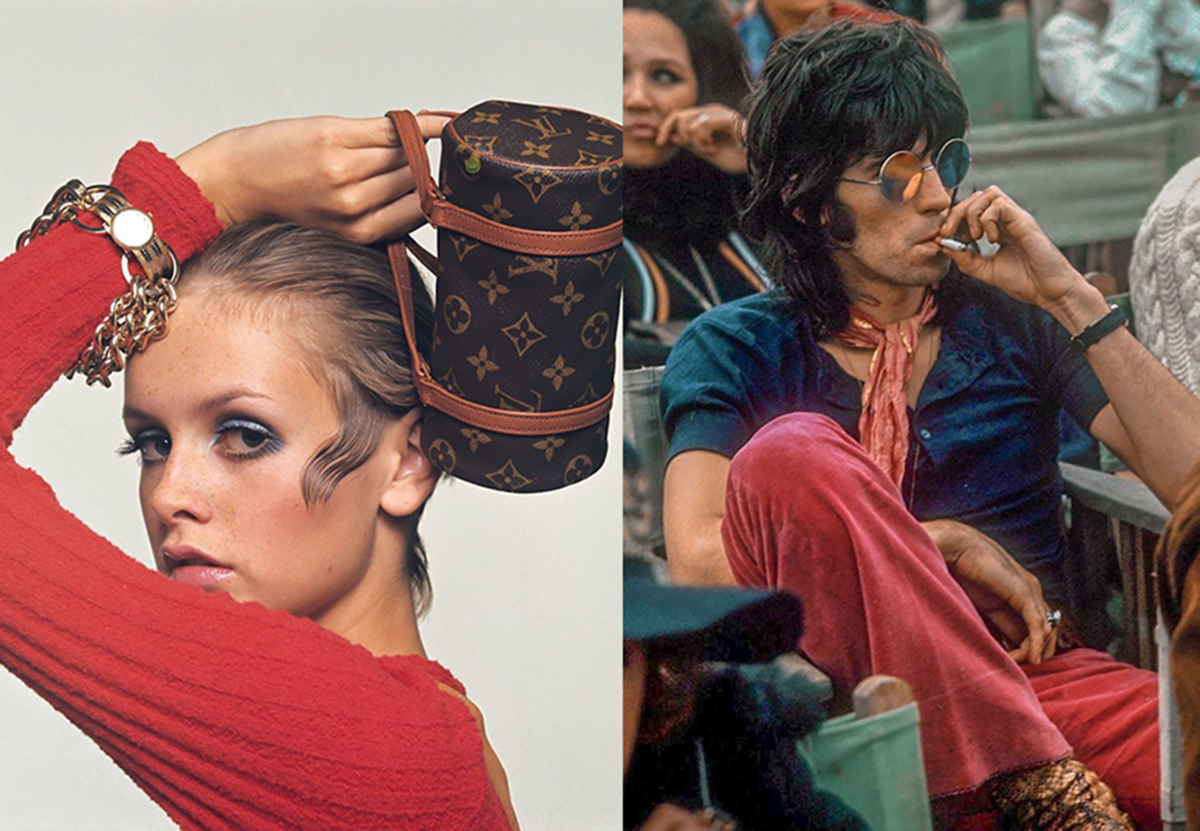
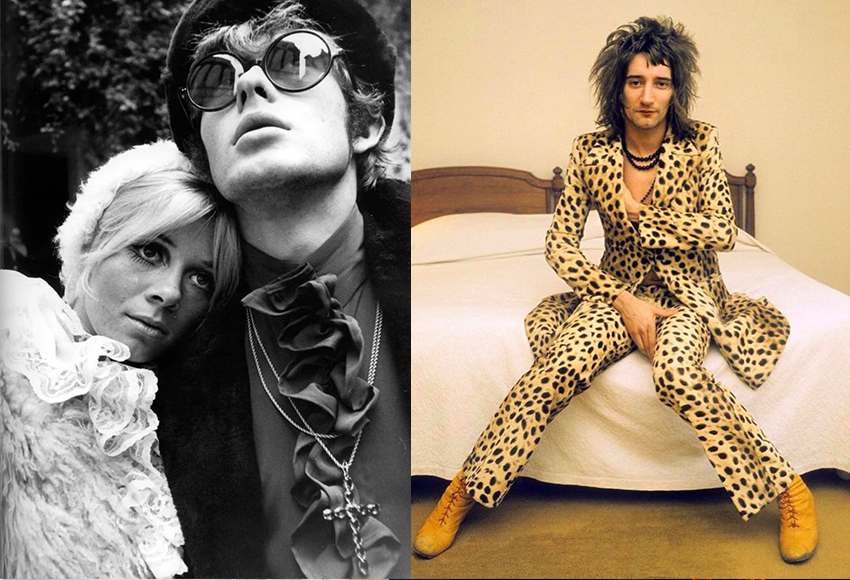
Left: Twiggy for Vogue 1967 @Bert Stern and Keith Richards 1969 @Brian Moody.
Right: John Crittle and his wife 1966 © Terry O’Neill and Rod Stewart for Rolling Stones 1973 © Charles Gatewood
Generation Z — born between 1997 and 2012 — is not producing a Youthquake. It is producing what I call Microquakez: not one rupture but millions of simultaneous tremors, each with its own epicenter, its own brief duration, its own micro-community of witnesses. The ground is moving again. But there is no single fault line to map, no single direction of force.
The seismograph is reading from everywhere at once, and the readings are contradictory, overlapping, and gone before you can name them. This is not a personality trait of the generation. It is the structural consequence of the infrastructure through which they receive and transmit culture. TikTok did not simply replace Vogue and MTV — it replaced the concept of a center.
A magazine editor, a television channel, a creative director in a Paris atelier: these were all versions of the same thing, which was gatekeeping. Controlled channels through which cultural authority moved in one direction — downward, from a consecrated few to an aspiring many. Dismantle the hierarchy and you do not get chaos. You get lateral transmission at speed, between millions of points simultaneously, none of which holds permanent authority over the others. A micro-trend can now saturate and exhaust its visual vocabulary in three weeks. The influencer is no longer a person. It is the algorithm, the community, the distributed logic of what circulates.
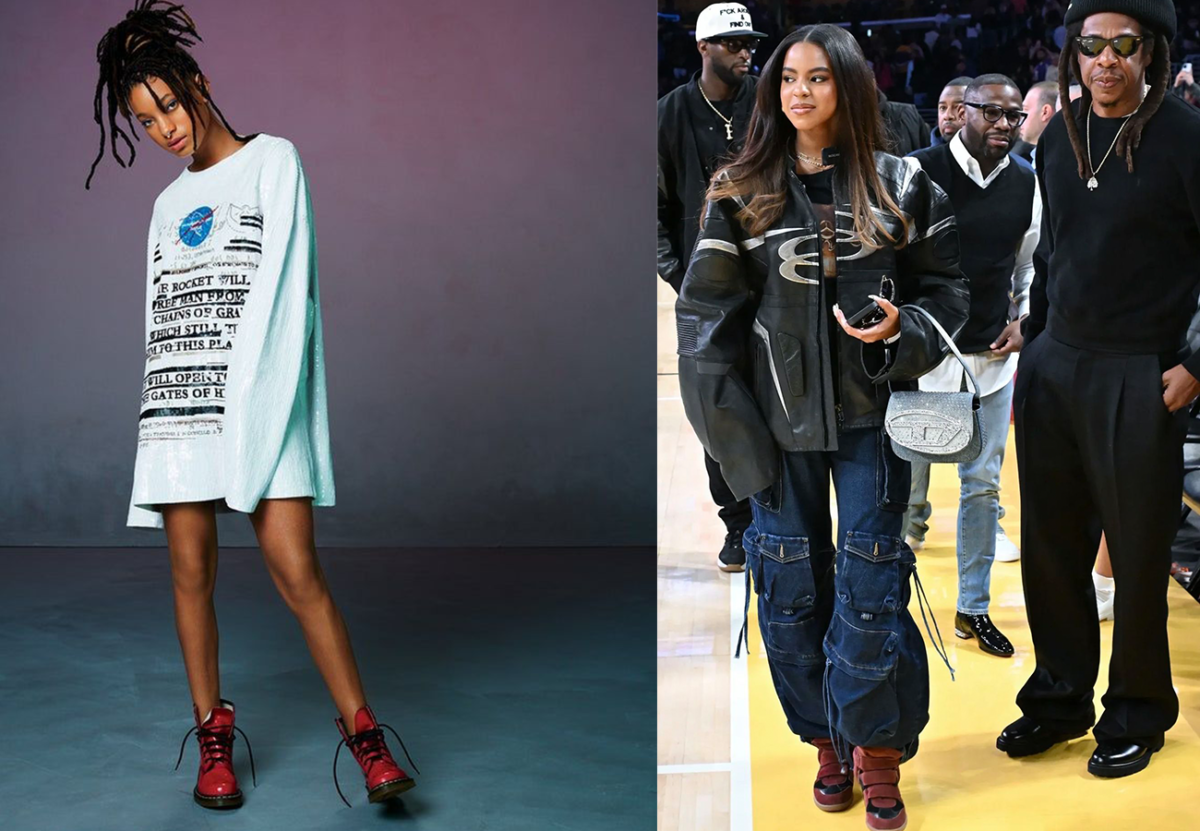
Right: Blue Ivy Carter courtside with Jay-Z, © Allen Berezovsky/Getty Images.
The new cultural authority is entirely in the assembly.
Consider Blue Ivy Carter. At 14 — born January 7, 2012, At the generational threshold where Gen Z ends and Gen Alpha begins — she has already appeared on the Billboard chart, won a Grammy, and walked the Met Gala in a year when the institution quietly set aside its long-standing age convention. The wardrobe logic at the NBA Cup quarterfinals in Los Angeles, December 2025 is instructive: a vintage Balenciaga jacket (€12,000), a vintage Diesel bag (€750), cargo pants from the current season, sneakers pulled from her mother’s personal archive. One inherited garment. One found piece. One archive acquisition. One contemporary item. This is not styling. It is a methodology. High and low, inherited and hunted, archive and now — assembled without a single brand’s permission. The outfit makes a structural argument: value is not determined by the house that made the object, but by the intelligence of the hand that chose it.
55%
of younger generations won’t buy new if they can find it secondhand
40%
of global fashion spending driven by Gen Z & Alpha by 2035 — BCG / WWD, 2025
82%
evaluate resale value before purchasing new — WGSN, 2025
The luxury establishment is encountering this reality at precisely the wrong moment. Bain-Altagamma’s most recent market study finds that years of aggressive price increases have left a significant portion of the traditional luxury customer feeling structurally alienated — the word Bain uses is “betrayed.” The global personal luxury goods market reached €358 billion in 2025 and is projected to recover 2–4% in 2026, but the recovery is complicated by a trust deficit that no campaign budget resolves. A Chanel bag that cost €3,000 in 2019 and €10,000 in 2025 has not become more desirable; it has become a different object. The cultural weight that once justified the premium has been quietly decoupled from the price increase that enforced it. This is where the Microquakez and the luxury establishment are on a direct collision course: one generation is constructing its own logic of value from the ground up, while several major houses spent the last five years extracting value from definitions that are no longer collectively held. The resale market is the most precise evidence of what replaces those definitions.
“Gen Z allocates nearly half their apparel budget to secondhand.
82% evaluate resale value before any new purchase.”
They are not rejecting luxury — they are demanding that it participate in the same logic of cultural exchange that governs everything else. Fashion as liquid asset. The exit strategy mapped before the entry. This is not a budget workaround. It is a philosophical position about ownership in a system where identity is assembled, not inherited — and where the intelligence of the selection is the signal, not the price of what was selected.
Microquakez are not evenly distributed, and the fault lines do not follow the map the luxury establishment has always used. East Asia has built the most efficient infrastructure for producing cultural desire at industrial scale since the Hollywood studio system — and it is considerably more sophisticated, because it is distributed by design. Seoul is now the reference city for Gen Z fashion and aesthetic taste across a region of several billion people: Korean beauty standards, Korean street style, and Korean semiotic codes flow outward into global markets with the same directional force that Parisian elegance once commanded, not by institutional decree but by the sheer volume and velocity of cultural production.
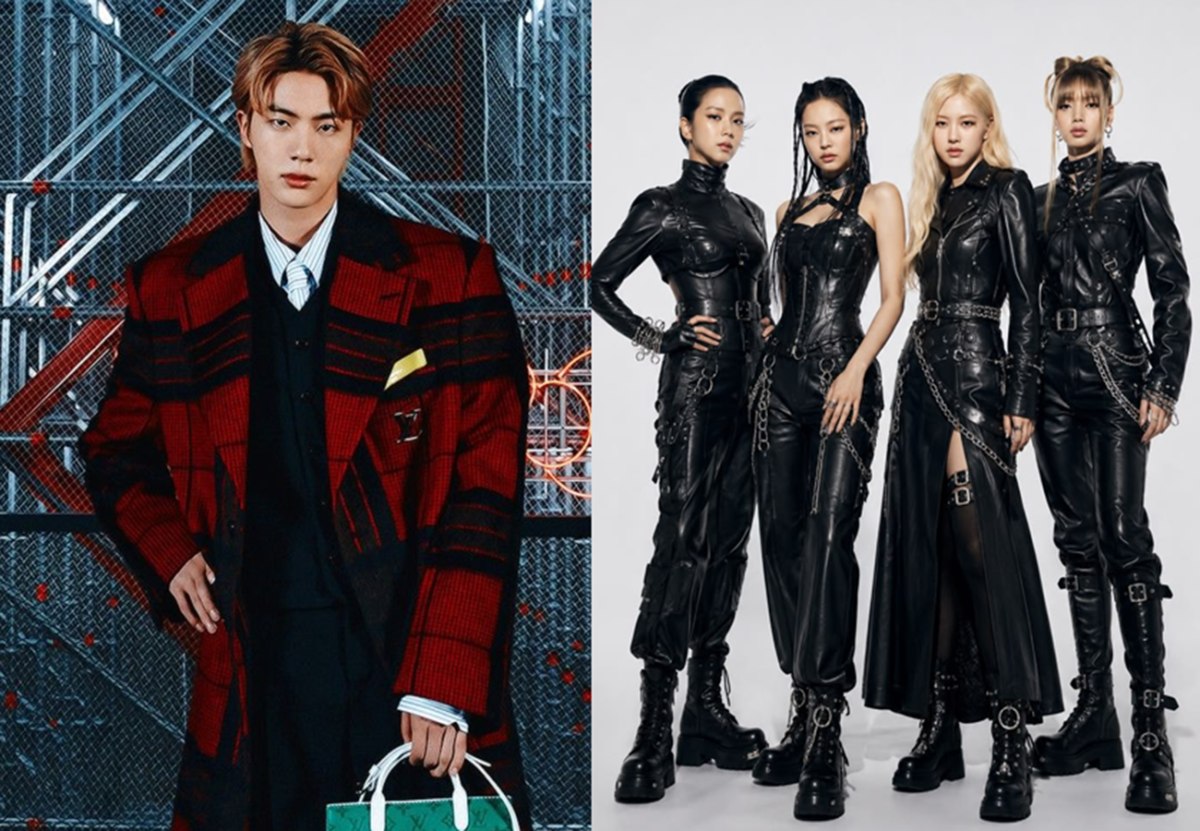
The contrast with the 1960s could not be more structurally precise. BTS — seven members, South Korean, operating initially from a small entertainment company in Seoul that the Western music industry declined to take seriously — became the most commercially powerful musical act on the planet not through a single concentrated channel but through ARMY: a distributed global fan community that functioned as its own media infrastructure. Each of the seven members is a distinct cultural node, with individual fandoms, individual aesthetics, and individual luxury brand partnerships operating simultaneously and generating separate signals: Jimin for Dior, Jin for Valentino, V for Celine, RM for Bottega Veneta. BLACKPINK executed the same logic more explicitly: four members, four luxury houses, one act — Jennie for Chanel, Rosé for Saint Laurent, Lisa for Bvlgari, Jisoo for Dior. Cultural authority deliberately distributed across the group’s own internal structure. In the 1960s, one band carried one message. The Beatles stood for optimism, modernity and a clean-cut youth revolution—their haircuts alone became a global symbol of generational change. The Rolling Stones embodied its opposite: rebellion, sexuality and anti-establishment attitude. In the 2020s, one band carries four brand universes, each speaking to a partially distinct audience.
China’s contribution operates on a different axis entirely. The domestic streaming infrastructure — Douyin, NetEase Cloud Music, Bilibili — has produced artists and phenomena of enormous scale that circulate entirely within an Asian ecosystem, never requiring Western recognition to achieve it. The aspiration is no longer toward the Western market as the destination of cultural legitimacy. It is simply elsewhere — at a scale that makes Western recognition increasingly beside the point. China’s relationship to luxury has undergone a structural recalibration — domestic economic headwinds and a political climate that complicated the visual language of conspicuous consumption — producing something more complex than a slowdown: the rise of guochao, Chinese aesthetic codes reclaiming cultural ground previously ceded to European houses. A generation that once acquired Hermès to signal international cultural fluency is developing genuine enthusiasm for locally produced luxury as an expression of national confidence. This is not a retreat. It is a repositioning the European luxury establishment is not yet equipped to read correctly.
Japan’s contribution to this landscape operates within its own grammar. Acts such as King Gnu, Yoasobi, and Fujii Kaze have built vast global audiences through music that circulates primarily through anime soundtracks and streaming, bypassing the Western music press entirely and arriving at a scale the Western press then has to acknowledge after the fact. The idol economy of SixTONES, Snow Man, and BE:FIRST operates with a Japanese logic of loyalty, scarcity, and ritual consumption — limited physical releases, structured member hierarchies, fandom as ongoing social commitment — that predates the algorithm and will outlast it.
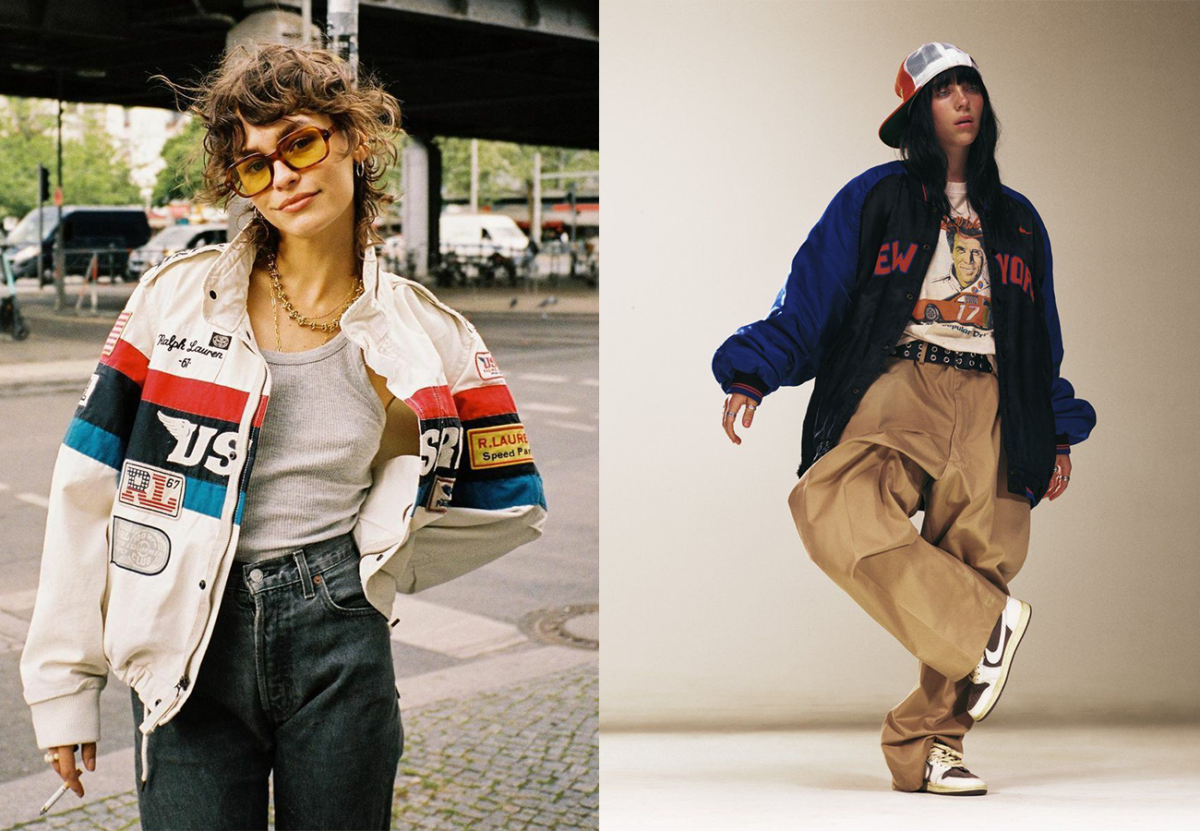
The United States presents a different and specifically American tension. Gen Z there navigates a genuine contradiction between the aspiration structure that luxury represents — social mobility, visible success, cultural capital — and a political-ethical framework structurally skeptical of the systems producing it. The resale market is strongest in the US precisely because it resolves that contradiction: participation in luxury culture without full endorsement of its ideological architecture. Sports culture remains the dominant mediating force: the Air Jordan is not a sneaker but a cultural object with its own mythology, resale economy, and social semiotics — one that anticipated the luxury streetwear convergence by three decades. Billie Eilish made a different kind of American argument. The oversized silhouettes of her early career were not a style preference — they were a structural refusal to offer the body as a surface for comment. When she wore Oscar de la Renta to the Met Gala in 2021, she did so on a condition: the house would pledge to stop using fur. Fashion as ethical leverage — and a relationship with Loewe chosen for its intellectual specificity, not its commercial reach. Taylor Swift may be the last genuinely monocultural American moment, and the fact that even her dominance is built on a segmented fandom ecosystem demonstrates how structural the fragmentation has become.
All while Europe recovers its relevance: how to carry genuine cultural weight in a system where no single voice can claim the authority that Paris once held as an institutional birthright. Milan, Vienna, London, and Paris each maintain their specific cultural registers — craft, architecture, music, philosophy — but the register only matters when it is active. Miu Miu understood this before most. Its recent Milan activation — a library, readings, a space built around ideas rather than product — was not a marketing event. It was a demonstration that a house can still command a room when it has something to say rather than something to sell. Rosalía is the clearest European demonstration of what this looks like when it works: she did not dilute flamenco for global reach — she used it with such structural precision that the global reach came to find her. From El Mal Querer to MOTOMAMI, the ascent bypassed every traditional European cultural export mechanism, and her association with Loewe — a Spanish house whose authority was rebuilt through intellectual rigor, not heritage alone — is the fashion equivalent of the same argument. Heritage, in this context, is a language. It is valuable when it is spoken with precision. It becomes mere credential when it is treated as sufficient.
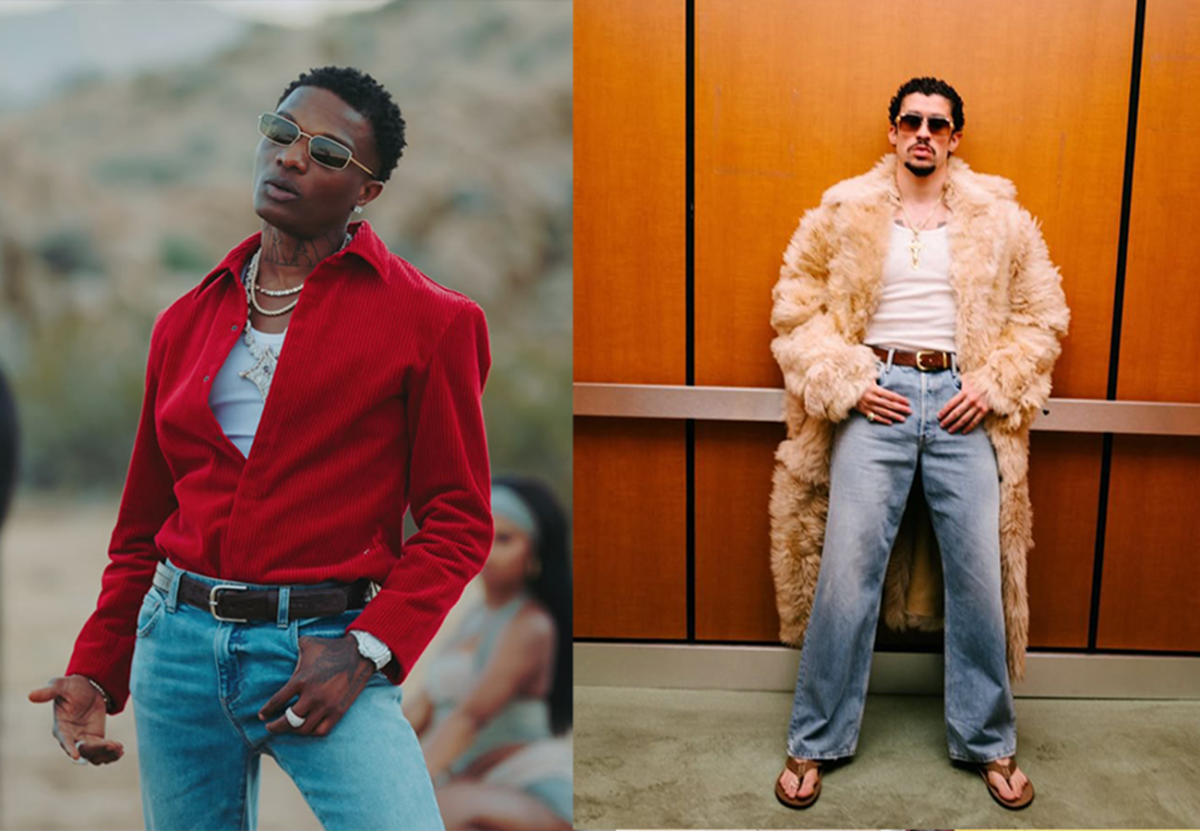
Africa is the dimension of this picture that the Western luxury establishment is most systematically failing to register, and the failure is not trivial. Afrobeats — rooted in Lagos, extended through Accra and Nairobi — is the most genuinely global music genre of the 2020s. Burna Boy, Wizkid, and Tems have carried it to Grammy wins, headline festival slots, and streaming figures that no Western industry analyst predicted, because no Western industry analyst was attending to the right geography. The cultural logic is identical to the one operating everywhere else in this essay: authority earned through cultural force, not institutional ratification. The same emergence is now underway in fashion. Thebe Magugu, Kenneth Ize, Orange Culture, Tongoro, and Rich Mnisi are building internationally recognized luxury practices that arrive at the global market on their own terms, without requiring European validation as a prerequisite. The continent holds the youngest median population on earth — a demographic fact of the kind that determines the next fifty years of global consumer markets, not the next five. It is already developing its own taste infrastructure, its own cultural authorities, its own aesthetic philosophy, largely without the attention or investment of the established luxury houses. That inattention is not a neutral position. It is a strategic miscalculation.
In Latin America, Bad Bunny made Puerto Rican vernacular culture globally hegemonic — Spotify’s most-streamed global artist four times, Billboard’s Top Latin Artist of the 21st Century, Super Bowl LX headliner and the first all-Spanish-language solo artist to do so, the first Spanish-language work nominated simultaneously in album, record, and song of the year at the Grammys. None of it required translation. That is the structural argument. His Adidas collaborations embedded Puerto Rican codes directly into product — Caribbean palettes, flags on insoles, Spanish phrases on straps — so the object carried cultural identity before the consumer carried it. Karol G operates a different axis of the same reversal: Colombian, maximalist, globally dominant without Anglo legibility as a prerequisite. What Latin America is producing is not a regional variation on global culture. It is a reversal of the transmission direction — aesthetics that traveled outward for a century as unattributed influence now arriving at the center with full attribution.
The question that follows from the regional analysis is whether the Microquake produces anything universal — any characteristics that Gen Z shares across geographies despite the profound divergence in aesthetic codes, cultural references, and taste infrastructure. The answer is yes, but the universals are not aesthetic. They are structural.
Regardless of whether identity is being assembled in Seoul, Lagos, São Paulo, or Vienna, Gen Z practices the same underlying logic: curation as cultural authority. The specific pieces differ. The semiotic codes differ. The brands that carry weight differ enormously by market and context. But the act — selecting, combining, assembling from multiple sources without allegiance to a single house, label, or cultural authority — is consistent. Blue Ivy Carter’s mixed-archive outfit in New York and a vintage find in Itaewon are different objects assembled within different systems of meaning. The logic of assembly as the signal, rather than any single object, is identical.
The relationship to secondhand and resale is another genuine universal, though its expression takes different forms. In the United States and Europe, Vestiaire, Depop, and Vinted are lifestyle infrastructure. In Japan, the culture of pre-owned — mottainai, the ethic of waste-aversion — predates Gen Z by generations but finds new expression through their hands. In Lagos and Accra, the recycled fashion market has always been primary infrastructure, not alternative: a generation that grew up understanding the relationship between global fashion flows, local economic realities, and the cultural intelligence required to navigate both. Different economies, different moral frameworks, same structural relationship to ownership as temporary stewardship rather than permanent acquisition.
The third universal is the most consequential: a structural distrust of institutional authority, and a corresponding demand that cultural legitimacy be earned rather than assumed. A French heritage house, a Korean major label, a Nigerian broadcaster, an American fashion magazine — none of these can command attention through institutional position alone. Across every geography, Gen Z requires evidence that an institution carries genuine cultural weight within their specific context. The mechanism for demonstrating that weight is different in each market. The requirement is not. The gatekeeper’s era is over everywhere simultaneously. What replaces it — earned relevance, built through cultural precision rather than marketing volume — is the only currency that still trades across borders.
Luxury is no longer defined by what it costs. It is defined by whether it means anything — and whether that meaning survives the scroll.”
Vreeland’s word worked because the 1960s had a center. One wave, one direction, one event with enough concentrated mass to register as geological. You could name it the epicenter. You could stand in it. What we have now is something structurally different — a generation that has grown up inside distributed infrastructure, that has never known a single channel through which culture moved, that practices distinction through resale, manages desire through selective opacity, and finances access through instruments that decouple the signal from the capital required to sustain it.
The earthquake is not generated by the generation alone. It is generated by the mechanism — the channel, the algorithm, the logic of decentralized, accelerated, constant exchange between millions of simultaneous senders. The ground is shaking again. The fashion industry that built itself around predicting where the epicenter would be is still looking for a fault line that has already dispersed into a million points of simultaneous pressure. The question is not how to find the center. It is how to operate with full coherence when the center no longer exists.
REFERENCES AND SOURCES
- References and Sources
- BCG. (2025, October 29). Gen Z and Gen Alpha set to drive 40% of fashion spending by 2035.
Boston Consulting Group. bcg.com - ThredUp. (2025). 13th annual resale report. ThredUp. thredup.com
- ThredUp. (2026). 14th annual resale report: New era of structural competition and AI-driven discovery.
ThredUp Inc. ir.thredup.com - Bain & Company / Altagamma. (2025).
Global luxury stays resilient despite economic headwinds and shifting consumer trends. Bain & Company. bain.com - WGSN. (2025). 40% of Gen Z turn to resale to find the styles they’re looking for. WGSN. wgsn.com
- Lyst. (2025). The Lyst Index Q4 2025. Lyst. lyst.com
- Bourdieu, P. (1984). Distinction: A social critique of the judgement of taste. Harvard University Press.
- Han, B.-C. (2015). The transparency society. Stanford University Press.
- Lipovetsky, G. (1994). The empire of fashion. Princeton University Press.
- Kapferer, J.-N., & Bastien, V. (2012). The luxury strategy: Break the rules of marketing to build luxury brands (2nd ed.). Kogan Page.