
27 Oct Fashion Circus
by Carolina Marchiori
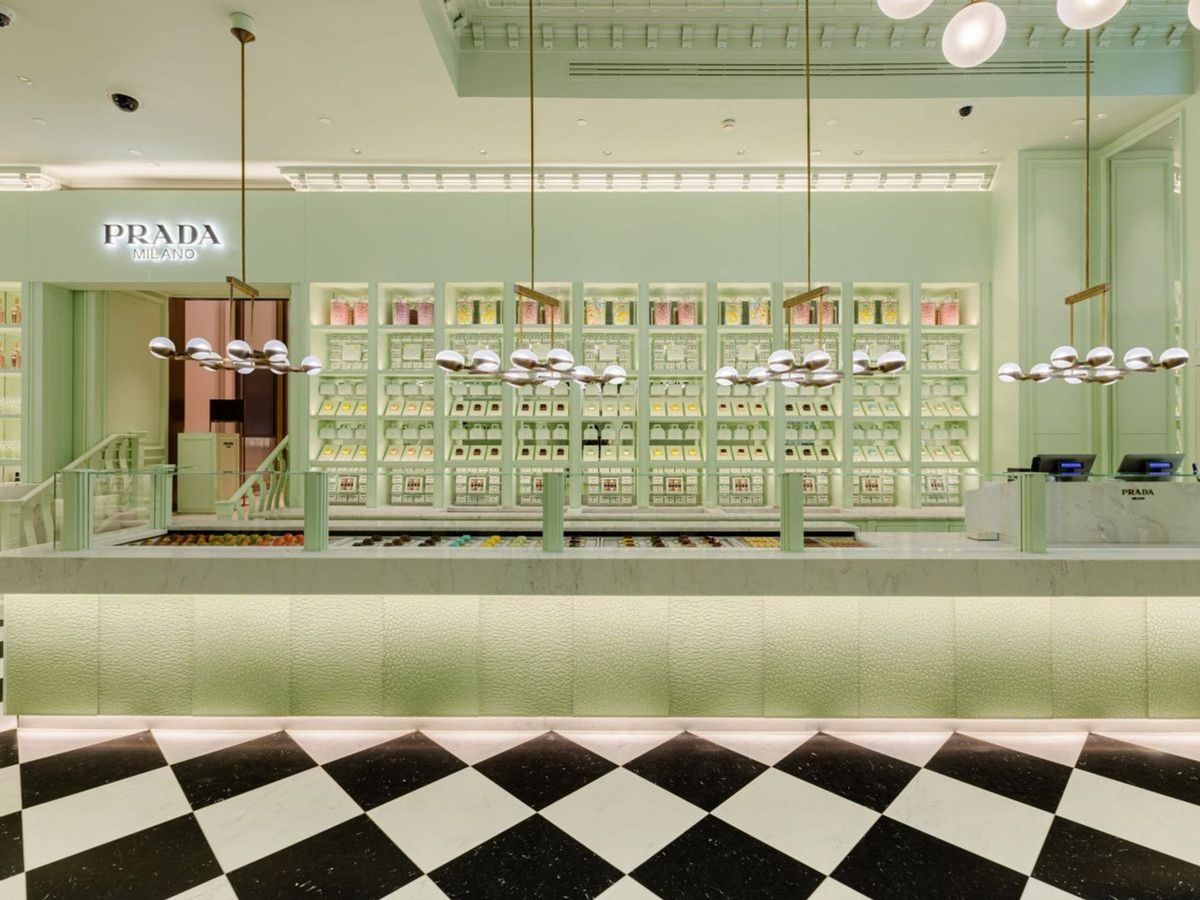
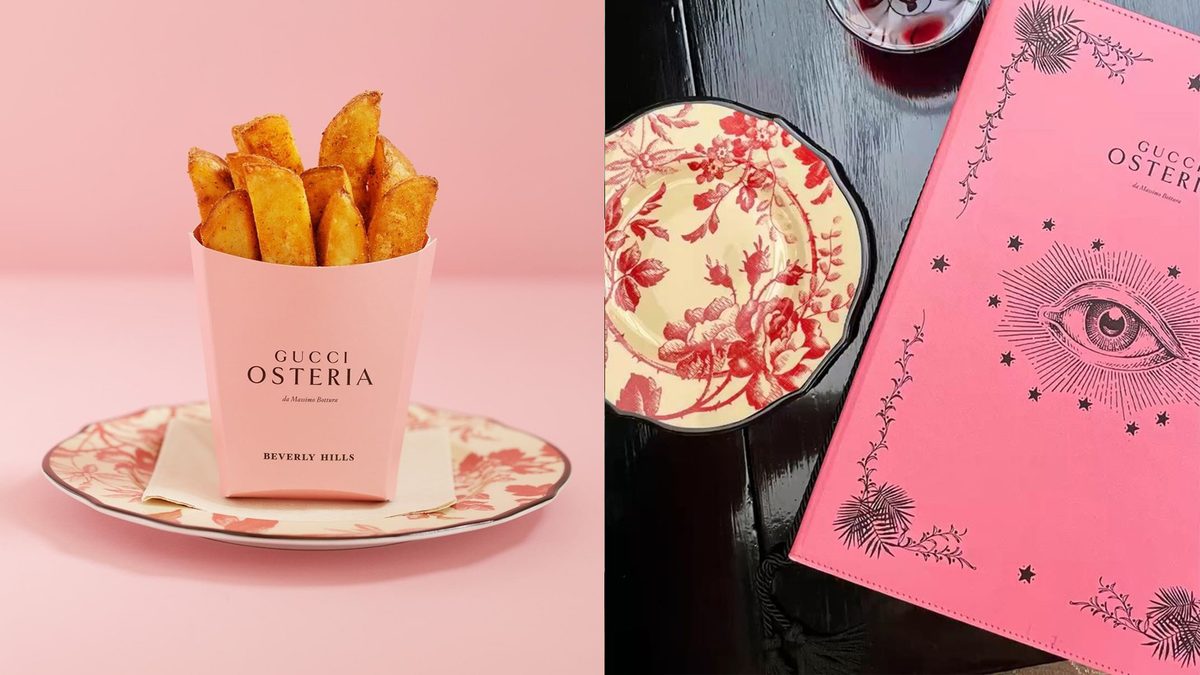
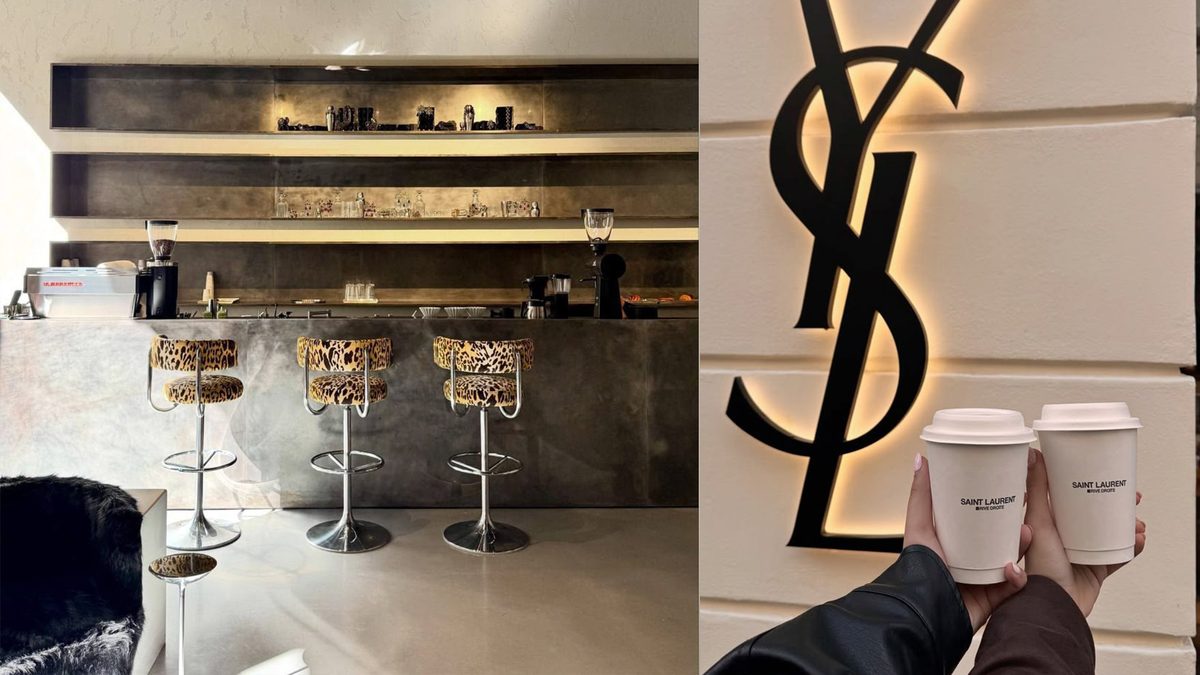
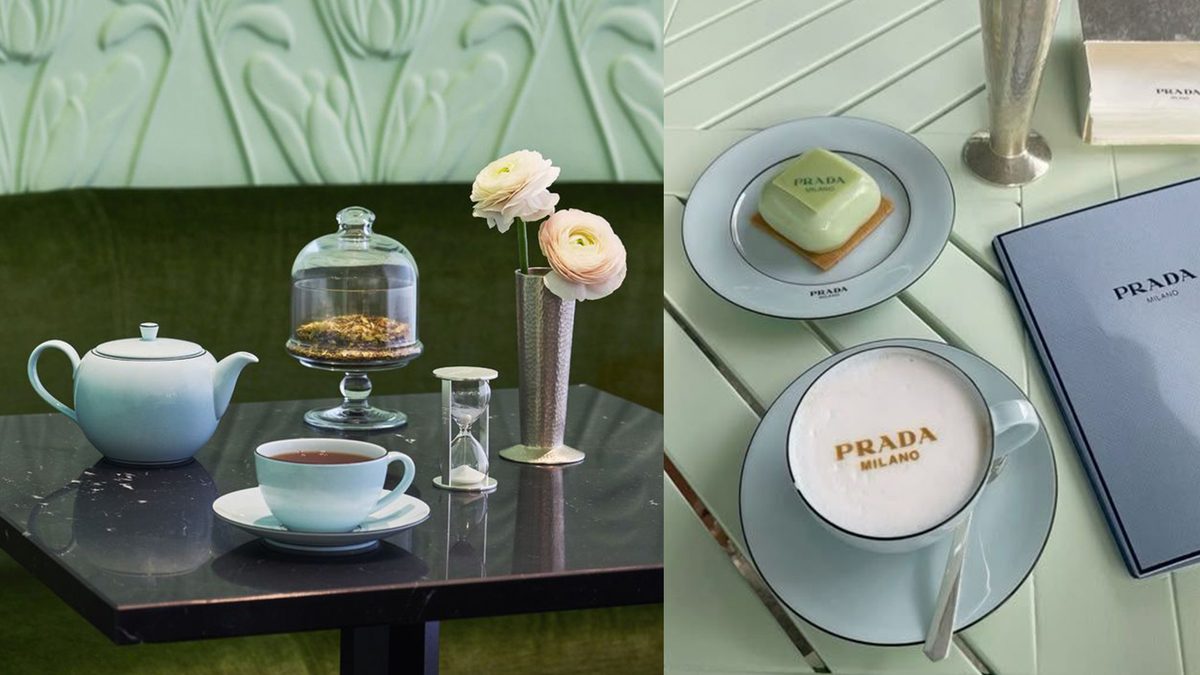
The queue outside a luxury flagship used to be for a bag. Today it is as often for a coffee. In Singapore a cappuccino at Prada Caffè costs around fifteen dollars and arrives on branded crockery, in a room lit like a film set. In Paris, within a few hundred metres of one another, Louis Vuitton, Dior, Lacoste and Paris Saint-Germain each run a café, each promising a way to live inside the brand. In Florence, Gucci’s restaurant with Massimo Bottura holds a Michelin star.
Behind the cafés runs a calendar that never empties. A travelling exhibition opens in Shanghai and moves on to Tokyo. A pop-up tours Asia for a season. A garden opens inside a video game, a capsule drops on a Thursday, an ambassador appears courtside, a foundation unveils its new building across the street from the Louvre. Taken together they form a circus that never closes between performances.
That is where we are.
Luxury fashion has become a stage on which the product is one act among many, and the stage keeps growing because the product alone no longer sells at the prices the industry has set.
Some houses refuse the hoop of fire and the clown’s nose. They play one stage, night after night, and their numbers suggest the house is still full.
Bagflation
In 2025 the luxury market shrank for the second year in a row, for the first time since 2008. Since 2019 the price of an iconic handbag has risen by up to 70 percent, while everyday prices rose by about a quarter. Between 2022 and 2025 luxury lost 70 million customers, twenty million of them in 2025 alone.
Chanel’s Classic Flap shows the curve. It cost $5,800 in the United States in 2019 and $10,800 five years later. In 2024 the house’s sales fell for the first time since the pandemic, and its profit by almost a third.
The backstage
In 2024 a Milan court placed Dior’s Italian leather-goods unit under judicial administration for a year. A subcontractor had been paid €53 to make a bag that sold for €2,600, and the court called it an established method rather than an isolated lapse. Armani’s supply chain had shown a similar gap a few months earlier.
Claudia D’Arpizio, who has tracked the luxury market for Bain for more than two decades, called the industry’s pricing “very dangerous” because it opened a gap between price and value that anyone could see.
The circus
The industry’s first answer was to change the ringmaster. In a single season around ten new creative directors made their debut, many of them simply swapping tents. Alessandro Michele left Gucci for Valentino, Pierpaolo Piccioli went on to Balenciaga, and Demna moved from Balenciaga to Gucci, the house Michele had left. Then the industry added rings.
In the 1880s the great American circuses decided that one ring was no longer enough. Barnum & Bailey put three into a single tent and ran them at once, a trapeze act in one, elephants in the next, clowns in the third. The audience got more show for its ticket and saw less of it. English has kept the phrase ever since. A three-ring circus is any scene in which too much happens at once for anyone to follow.
The luxury house runs ten. The bag was once the act in the centre ring, the one the audience had come to see. Today it performs somewhere in the middle of the tent. Fewer people are watching.
For most of its history luxury sold distance. Few could own the thing, and that was the point. The rings sell nearness, one step at a time. A coffee under the logo, a ticket to the foundation, a lipstick in its lacquered case, a dinner, a card holder, a night in the house’s hotel, the bag, a couture fitting, an apartment in the house’s residence. At the centre are the yacht and the private dinner, which no one can buy without an invitation.
And the rings never stop turning. In a single year Loewe’s Crafted World moved from Shanghai to Tokyo, Dior’s Designer of Dreams arrived in Seoul, Louis Vuitton opened two exhibitions in Osaka, Gucci kept a permanent town running inside Roblox, and the Fondation Cartier reopened opposite the Louvre. Each was announced as an event. Together they make a programme, and a programme has to be filled. Flagships are now planned as theatres, and collaborations are timed to fill the quiet weeks between collections.
The event replaces the ritual. A ritual gains meaning each time it recurs. An event loses its meaning the moment the next one is announced. The great houses were once built on repetition, the same bag reordered season after season, the same boutique visited for decades. The circus turns them into event systems, and an event system can only ever promise the next thing. Most of these acts leave little behind once the audience has gone home. A capsule that sells out by noon is forgotten by the next drop. An installation lasts as long as its photographs
Sell-out or survival
From inside the house, the coffee makes sense. The outer rings bring revenue that does not depend on the season, contact that fills the customer database, and a place in the customer’s daily routine. The hope is that today’s visitor becomes tomorrow’s client. So far the numbers point the other way. The cafés multiplied in the very years in which seventy million customers left.
Pierre Cardin tried something similar long before the café. He licensed his name onto almost everything in the 1970s and became the textbook example of dilution. Gucci went through its own version in the 1980s and was rebuilt partly by buying back its licences. In 2026 it signed its name into fifty years of mass-market beauty.
Luxury’s oldest rule is that a house must not chase demand and must stay hard to reach. Every ring breaks that rule by design. Whether that damages the house depends on what lies behind the café. If there is an object and a craft the visitor can come to want, the café is a door. If not, it is the whole visit.
Tokyo, Seoul, Shanghai
The circus reached Europe late. Asia entered it first, and its three great markets passed through it at different moments, like a time-lapse of what Europe is living now.
Japan was luxury’s first mass market, the country of the logo in the 1980s and 1990s. By 2009 only a third of Japanese consumers still cared for luxury goods, down from half five years earlier. Japan then built one of the deepest resale markets anywhere, and its customers learned to buy less and keep it longer. They stayed with luxury but went back to the object.
Korea turned the circus into a part of the city. Seongsu, a former factory district in Seoul, became the world’s laboratory for the pop-up. By 2026 the brands that had come for a few weeks were signing long leases. An event that succeeds wants an address. It ends, when it ends well, as ritual.
China compressed every phase into a single decade and in 2025 it split. Pop Mart carried the circus to its conclusion, with blind boxes, drops and queues, and nearly tripled its revenue. In the malls of Beijing and Shanghai, meanwhile, the longest queue formed outside Laopu Gold, which sells gold worked by traditional methods in forms its buyers recognise as their own, while the European boutiques nearby grew quieter.
The industry has barely registered any of this. It names China as its strongest engine of growth and still treats Asia as a market to perform for, rarely as an audience with a view of its own. Europe is likely to learn the lesson in its own flagships, from Asian visitors who have already been through it at home. European houses cannot win the circus, because its fastest forms belong to others. What they have, and others cannot copy, are their workshops and the things made in them.
Leaving the ring
In Europe a few houses reached the same conclusion early. They left the hoop of fire and the clown’s nose to others.
The Row has never run an advertisement. At its Paris shows Mary-Kate and Ashley Olsen ask guests to keep their phones in their pockets and hand out small notebooks instead. For hours after the collection has walked, no image of it exists online. In 2024 the Wertheimer family, owners of Chanel, and the family of L’Oréal’s heiress Françoise Bettencourt Meyers bought minority stakes at a valuation reported near one billion dollars. They put their money into a house that says almost nothing about itself.
The phone ban turns the circus around. Where other houses give the image away in the hope that the object will follow, The Row holds it back. The clothes travel on the bodies of the women who bought them, recognisable only to those who already know.
Brunello Cucinelli speaks mostly about philosophy. The house runs no café chain and no game world. Its stage has one address, Solomeo, the Umbrian village Cucinelli restored over decades, with its long lunch break, its theatre and its library, the same every day for years. In 2025, while most of the industry shrank, Cucinelli grew by more than ten percent and spent the money doubling its workshops.
Cucinelli is no ascetic. In December 2025 it premiered a feature film about its founder, directed by Giuseppe Tornatore, at Cinecittà. But it is one film about one place, made to be watched again. The house is vulnerable elsewhere. When a short seller questioned its business in Russia that autumn, the shares fell by a sixth in a day. Cucinelli rejected the claims. For a company that sells its ethics as much as its cashmere, the accusation alone was costly.
Both houses still sell, and both still speak. They have simply stopped adding stages. Hermès belongs with them. It runs no café chain, has stayed out of the designer rotation, and kept growing while others shrank, because its show is the object and the hand that makes it. That is the only show that never needs to be outdone next season.
The show must go on
“The show must go on” is a stage manager’s instruction. It means the audience must never see what is happening backstage. For a decade luxury followed it to the letter, adding rings, stars and dates while prices climbed behind the curtain and production costs stayed out of sight.
Then the backstage opened. Customers left. Court documents circulated. Designers changed houses so often that the houses began to look interchangeable. The industry’s reflex was to book another act. Most houses still plan to raise prices and add rings on top — the two moves that emptied the queue for the bag.
If most people will only ever buy the coffee, walk through the exhibition, visit the garden inside the game, what is the house still offering the few who buy the bag — and how long will they keep paying for a circus anyone can enter?
REFERENCES AND SOURCES
- Apollo. (2025, October 13). The rise and rise of private foundations in France. https://apollo-magazine.com/?p=1032258
- Associated Press. (2025, November 20). New study shows global luxury shoppers are spurning high-end brands over steep price hikes. https://www.news4jax.com/business/2025/11/20/new-study-shows-global-luxury-shoppers-are-spurning-high-end-brands-over-steep-price-hikes/
- Avvenire. (2025, December). Cucinelli riunisce Meloni e Draghi per l’anteprima del suo docu-film. https://www.avvenire.it/attualita/cucinelli-riunisce-meloni-e-draghi-per-lanteprima-del-suo-docu-film_101768
- Business Insider. (2024). Now we know how much it costs to make a $2,800 Dior bag. https://www.businessinsider.nl/now-we-know-how-much-it-costs-to-make-a-2800-dior-bag/
- Cushman & Wakefield. (2026, July 13). Why do global brands expand from pop-ups to flagship stores in Seongsu? https://www.cushmanwakefield.com/en/south-korea/news/2026/07/why-do-global-brands-expand-from-pop-ups-to-flagship-stores-in-seongsu
- CXM Today. (2022). Gucci built a persistent town inside of Roblox. https://cxmtoday.com/?p=18353
- Deloitte. (2026). Global powers of luxury 2026. Deloitte Global.
- Design Scene. (2024, February). LOEWE’s “Crafted World” exhibition. https://www.designscene.net/2024/02/loewe-crafted-world-exhibition.html
- DesignRush. (2025). Luxury brands shed $350 billion as price hikes push out shoppers. https://news.designrush.com/luxury-brands-lose-350-billion-market-value
- Dollars and Sense. (n.d.). Why do luxury brands like Prada and Louis Vuitton open cafes, and what are they really selling? https://dollarsandsense.sg/why-do-luxury-brands-like-prada-and-louis-vuitton-open-cafes-and-what-are-they-really-selling/
- Fem Founded. (n.d.). The Row [Case study]. https://femfounded.org/case-studies/the-row
- Fortune. (2024, September 12). Billionaire L’Oreal heiress, Chanel owners buy stake in Olsens’ fashion brand. https://fortune.com/2024/09/12/billionaire-loreal-heiress-chanel-owners-buy-stake-in-olsens-fashion-brand/
- Fortune. (2025, May 23). Chanel 2024 earnings. https://fortune.com/europe/2025/05/23/chanel-dividend-2024-earnings
- Glossy. (n.d.). Leprix establishes offices in Japan amid the market’s rising resale demand. https://www.glossy.co/fashion/leprix-establishes-offices-in-japan-amid-the-markets-rising-resale-demand
- Han, B.-C. (2018). Saving beauty. Polity.
- Han, B.-C. (2020). The disappearance of rituals: A topology of the present (D. Steuer, Trans.). Polity.
- Harper’s Bazaar Malaysia. (2025, March). The best fashion exhibitions to visit in 2025. https://harpersbazaar.my/fashion/the-best-fashion-exhibitions-to-visit-in-2025/
- Jing Daily. (2025, December 11). Laopu Gold set to surpass Richemont in China. https://jingdaily.com/intels/2025-12/11/laopu-gold-set-to-surpass-richemont-in-china
- Jing Daily. (2026, March 25). Pop Mart posts record results as Labubu reliance weighs. https://jingdaily.com/intels/2026-03/25/pop-mart-posts-record-results-as-labubu-reliance-weighs
- Kapferer, J.-N., & Bastien, V. (2012). The luxury strategy: Break the rules of marketing to build luxury brands (2nd ed.). Kogan Page.
- L’Essentiel de l’éco. (n.d.). Le café, nouvelle arme commerciale des marques de luxe. https://lessentieldeleco.fr/6608-le-cafe-nouvelle-arme-commerciale-des-marques-de-luxe/
- L’Oréal. (2026, July 7). L’Oréal enters a 50-year exclusive worldwide beauty licence with Kering for the Gucci brand. https://www.loreal-finance.com/eng/investir-day-paris
- Luxury Daily. (2025). Louis Vuitton opens two art exhibitions in Osaka. https://www.luxurydaily.com/louis-vuitton-opens-two-art-exhibitions-in-osaka/
- McKinsey & Company. (2009, August 1). Japan’s luxury shoppers move on. https://www.mckinsey.com/industries/retail/our-insights/japans-luxury-shoppers-move-on
- Numéro. (2026, March 2). Takeaways from Demna’s first Gucci show. https://numero.com/en/fashion/fashion-week-en/demna-gucci-fall-winter-2026-2027-debut-show-milan/
- Odell, A. (2025). Will Chanel’s weak results end bagflation? https://amyodell.substack.com/p/will-chanels-weak-results-end-bagflation
- Palmer. (2025, September 29). The great fashion shuffle: Who’s sitting where now. https://palmerpb.com/2025/09/29/the-great-fashion-shuffle-whos-sitting-where-now/
- Retail Sector. (2026, January). Brunello Cucinelli reports double-digit revenue growth in FY25. https://www.retailsector.co.uk/683663-brunello-cucinelli-reports-double-digit-revenue-growth-in-fy25/
- Reuters. (2025, September 25). Brunello Cucinelli rejects short sellers’ report over Russia business. https://www.stockopedia.com/share-prices/brunello-cucinelli-sp-a-BIT:BC/news/brunello-cucinelli-rejects-short-sellers-apos-report-over-russia-business-updated-019e69e7-ef1b-78e5-8d31-3cf7df655678/
- The Fashion Law. (2024). Dior handbags unit under fire amid allegations of labor exploitation. https://www.thefashionlaw.com/dior-handbags-unit-under-fire-amid-allegations-of-labor-exploitation/
- The Industry. (2026, January 14). Brunello Cucinelli posts ‘record’ €1.4bn revenues in 2025. https://www.theindustry.fashion/brunello-cucinelli-posts-record-e1-4bn-revenues-in-2025/