
08 Jun Silence as a Brand Strategy — The Case for Restraint
by Carolina Marchiori
The Row produces no advertising. Brunello Cucinelli speaks primarily about philosophy. Neither maintains a social media presence performing accessibility. They exist — in stores, in specific editorial contexts, on the bodies of people whose taste you register before you can name it — without announcement. You arrive at them through proximity to people who already know them. This is silence as a cultural position: not an absence of communication, but a highly specific form of it.
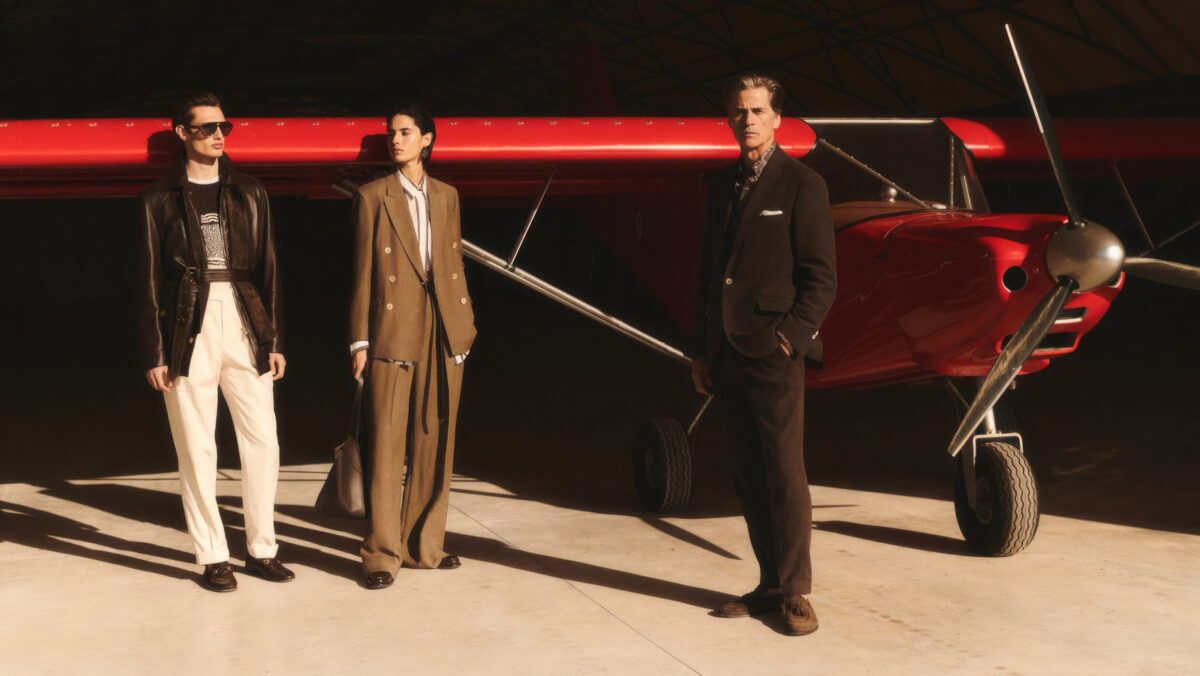
In 2024, the global personal luxury goods market contracted for the first time since 2009 — down approximately two percent to around €355 billion, following years of price-led growth (Bain & Company, 2025). Kering’s revenue fell twelve percent. LVMH’s organic growth slowed to its lowest point in a decade. The major houses, under pressure, responded with the reflex of volume: more campaigns, more celebrity, more logo work. Which is precisely the condition that makes silence more powerful, not less. When the field gets louder, scarcity of attention shifts to the house that withholds it.
+11.5%
CUCINELLI REVENUE GROWTH FY 2024
−12%
KERING REVENUE FY 2024
+18%
HERITAGE CRAFTSMANSHIP VS TREND-DRIVEN BRANDS
Both Cucinelli and The Row are operating at a different altitude than the contraction — one where ordinary competitive logic of trend responsiveness and volume ambition simply does not reach. Cucinelli holds to ten percent annual growth as institutional discipline: not because the market would not support more, but because more would require the compromises that erode the position. The Row carries zero advertising budget and production volumes that are tiny by any commercial standard. Both are competing not for market share but for cultural position. And cultural position, once genuinely established, does not need to be defended through communication. It defends itself.
Silence only works when there is something behind it.
The market can always tell the difference between a brand that is quiet because
it has nothing left to prove — and one
that is quiet because it has nothing left to say.
The most precise demonstration of what earned restraint actually looks like came from a house mid-reinvention. When Daniel Lee took over at Bottega Veneta in 2018, peak logomania was the defining condition of the market. Gucci was producing maximalism at full volume; the logo had become a cultural artefact across the field. Lee removed every legible Bottega identifier. The removal was possible precisely because the intrecciato weave already carried decades of recognition — the client who knew it did not need to be told. What the absence communicated was: the logo is for people who need others to understand. The weave is for people who already do. Lee used the competitor’s greatest investment — their omnipresent signage — against them. The field’s fatigue with visibility became Bottega’s advantage.
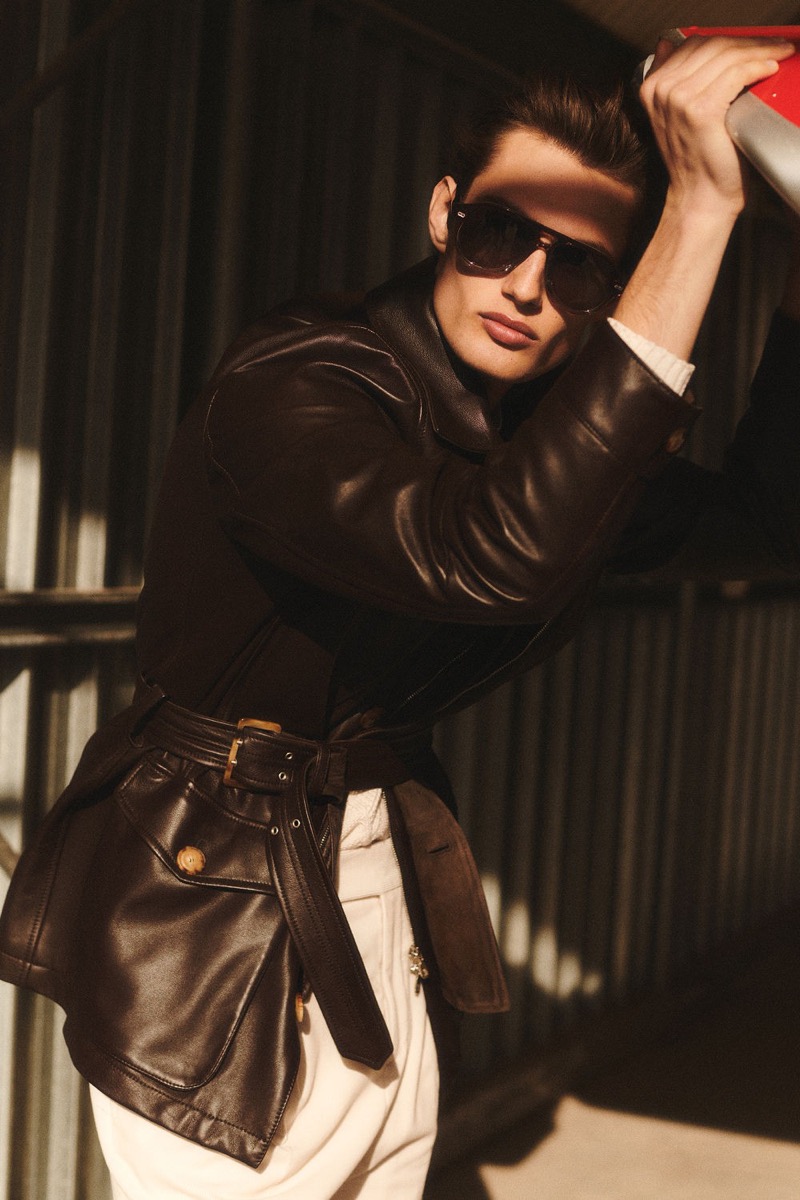

Cucinelli’s strategy is the more radical version of the same discipline. No discounting, no trend response, no acceleration beyond the self-imposed ceiling. The competitive effect is precise: by declining to respond to the market’s velocity, the house forces the market to orbit it rather than the other way around. Competitors who react to every signal exhaust themselves and their clients. Immovability, here, is not passivity — it is the most demanding form of positional hold, the refusal to be drawn onto ground where the competitor’s scale would be an advantage rather than a liability.
What the market is punishing is not noise or silence.
It is incoherence — the failure to
hold a legible position under commercial pressure.
The error is to treat quiet luxury as a style choice rather than a structural one. The neutral tones and unbranded surfaces are not the strategy. They are the visible surface of an identity that has spent years accumulating enough cultural weight that the absence of announcement is itself the announcement. A brand can achieve this at any age, if its visual language has been held with sufficient rigour and every decision has served a single coherent argument about what it is and who it is for. Without that foundation, the absence of noise is simply — absence.
The question, before any brand reaches for restraint, is not aesthetic. It is structural. When we say nothing, does the market hear something? If the honest answer is not yet — the work is to build what the silence requires before choosing it.
REFERENCES AND SOURCES
- Kapferer, J.-N. & Bastien, V. — The Luxury Strategy: Break the Rules of Marketing to Build Luxury Brands, Kogan Page, 2012
- Bain & Company & Altagamma — Luxury Goods Worldwide Market Study, 2024 edition
- Brunello Cucinelli — Annual Report & Investor Relations, FY 2024
- Kering — Full Year 2024 Results
- Porter, M. E. — What Is Strategy, Harvard Business Review, 1996
- Yoffie, D. B. & Kwak, M. — Judo Strategy: Turning Your Competitors’ Strength to Your Advantage, Harvard Business School Press, 2001