
About this project
All About Italian Food
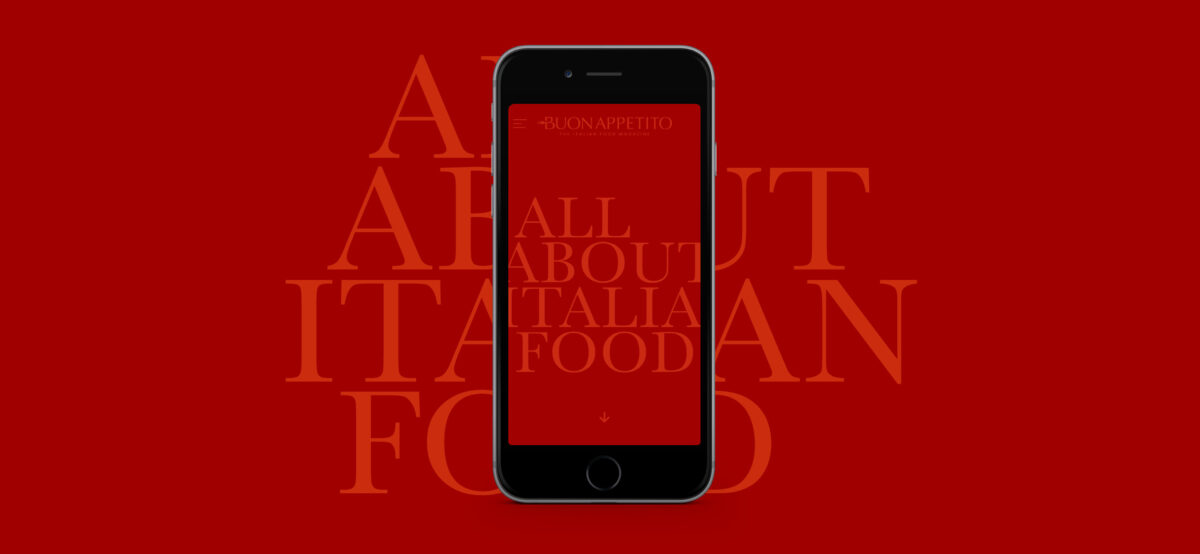
Buonappetito is an online marketplace for authentic Italian food culture — a curated platform connecting emerging regional producers with an international audience of italophile consumers who value provenance as much as product. In 2022, the brand needed a publication that could carry that understanding into a more sustained register. The question was not how to build a food magazine. It was what kind of cultural argument a food magazine could make — and whether the structure of the magazine itself could be the argument.
THE SITUATION
Corporate publishing for an e-commerce platform occupies a structurally compromised position. The function of the publication is to serve the brand. The requirement of good editorial is to serve the reader. These two imperatives are not naturally aligned, and the gap between them is visible in every publication that attempts the form and fails: content that reads as promotion regardless of the narrative framing applied, stories that exist to move products rather than to illuminate the world the products come from.
Buonappetito’s asset was genuine and specific: direct relationships with small, regional Italian producers — people whose knowledge of a particular ingredient, a particular landscape, a particular method of making is irreplaceable and largely inaccessible to the international food culture that claims to value exactly this. The platform had these relationships. The challenge was to build a publication that made them legible as culture rather than as inventory.
The standard food magazine format — feature stories, recipes, travel content, producer portraits — can do this, in principle. In practice, it tends to produce a visual and editorial register that could belong to any premium food brand in any country. The format is generic even when the content is specific. To make Buonappetito’s regional intelligence legible as something other than good sourcing, the magazine needed a structural framework that was itself an argument about Italian food culture.
THE READING
Italian food culture is not primarily about ingredients. It is about the meal — the ritual social form that gives every ingredient its meaning, its sequence, its relationship to everything that precedes and follows it. The aperitivo is not just a drink. It is a threshold — the transition from the day to the evening, from work to table, from individual to collective. The antipasto is anticipation. The primo is commitment. The secondo is the core. Dessert is unhurried pleasure. The meal has a temporality, a social architecture, a way of holding people together across time that no other cultural form quite replicates.
This is the argument that Italian food culture has always been making. It is also an editorial architecture — a sequence that is not arbitrary but meaningful, that creates rhythm and accumulation, that gives a reader a reason to move through a publication rather than to browse it.
Most food publications organise by category, by season, or by region. None of these structures carries the relational intelligence of the meal itself. The editorial decision was to use the meal’s sequence as the publication’s organising logic — not as a metaphor, but as a structural system.
THE DECISION
The central decision was to let the rhythm of an Italian meal determine the architecture of every issue. Aperitivi opens the publication — lighter, more atmospheric, the register of anticipation. Antipasti introduces the producers and landscapes that will carry the issue’s content. The main courses deliver the editorial substance: in-depth portraits, long-form stories, the cultural intelligence that justifies the publication’s existence. Dessert and wine provide the close — unhurried, pleasurable, the register of the table after the meal has ended.
This structure is not decorative. It determines pacing, section length, typographic register, image rhythm, and the relationship between editorial and product content. The reader moves through the issue the way they move through dinner: with a sense of sequence, of escalation, of arrival. The magazine is not browsed. It is read.
The brand refresh of the online marketplace followed the same premise: a bolder, more confident visual language that could hold the cultural authority the magazine was building and carry it into the e-commerce environment. The digital integration — editorial content under the Experiences section — extended the publication’s logic into the platform’s daily rhythm, creating depth where most marketplaces offer only breadth.
THE WORK
Creative concept, editorial strategy, and art direction from the ground up. Magazine design and editorial structure across 84 pages, built on the rhythm of the Italian meal. Brand refresh and online marketplace redesign. Digital integration connecting editorial content to the platform’s e-commerce environment. Social media framework and marketing materials. First print issue in production, 2026.
THE SHIFT
Buonappetito Magazine gives the platform something an e-commerce environment cannot generate on its own: cultural authority — the quality that makes a reader trust that the brand understands what it is selling, not just where to source it. The producers it represents are not inventory. They are the protagonists of a specific, regional, irreproducible Italian food culture. The publication makes that legible.
When the structure of a magazine is itself an argument about the culture it covers — when the form and the content are the same thought — the publication does not need to justify its existence. It demonstrates it, issue by issue, course by course.