
About this project
Editorial authority for independent menswear.
Braun is one of Germany’s most distinguished independent menswear retailers — a house with deep roots in quality and craft, operating within Masculin, a national network of premium gentlemen’s outfitters united by a shared conviction about what men’s fashion at its best should be. In 2016, the network needed a publication that could speak to that conviction. Not a catalogue. Not a magazine. Something that was simultaneously both — and compromised neither.
THE SITUATION
The magalog is one of fashion publishing’s most structurally awkward formats. It exists because retail needs conversion and editorial needs authority — and these two imperatives do not naturally coexist. A catalogue that reaches for editorial register reads as pretension. A magazine that slides toward product presentation loses the quality that makes editorial valuable in the first place: the reader’s trust that they are being addressed, not sold to.
For Masculin, the stakes were particular. The network represents independent retailers — not a single brand with a unified identity, but a collective of distinct houses operating in different cities, serving a discerning customer who has made a deliberate choice to shop away from the flagship multiples. These customers do not need to be told what good menswear is. They already know. The publication’s role was not to persuade. It was to affirm — and to articulate the cultural intelligence that makes these retailers worth choosing.
A conventional corporate publishing approach would have flattened this. Generic lifestyle photography, brand-neutral layout, a design language shared by every other trade publication in the sector. That would have been the path of least resistance. It would also have been an argument against the very thing Masculin exists to protect.
THE READING
The brief named urban spaces as the contextual backdrop for the collections. This was the right instinct, but it contained a decision that had not yet been made: which urban spaces, and why. The difference between architecture as atmospheric decoration and architecture as editorial argument is not stylistic. It is conceptual.
The independent gentlemen’s outfitter exists in a specific relationship to the city. Not the flagship-district city of international luxury — not the boulevard, the atrium, the hotel lobby. The city of civic fabric: the well-proportioned street, the modernist institution, the public space that has been carefully maintained and quietly transformed across decades. This is the urban sensibility of the Masculin customer — someone who reads a building the same way they read a cloth. With attention, and with a point of view.
The publication’s visual logic had to locate the collections within that specific urban register. Not fashion photography that happens to be shot outside. Fashion as part of an argument about how a certain kind of man inhabits a certain kind of city.
THE DECISION
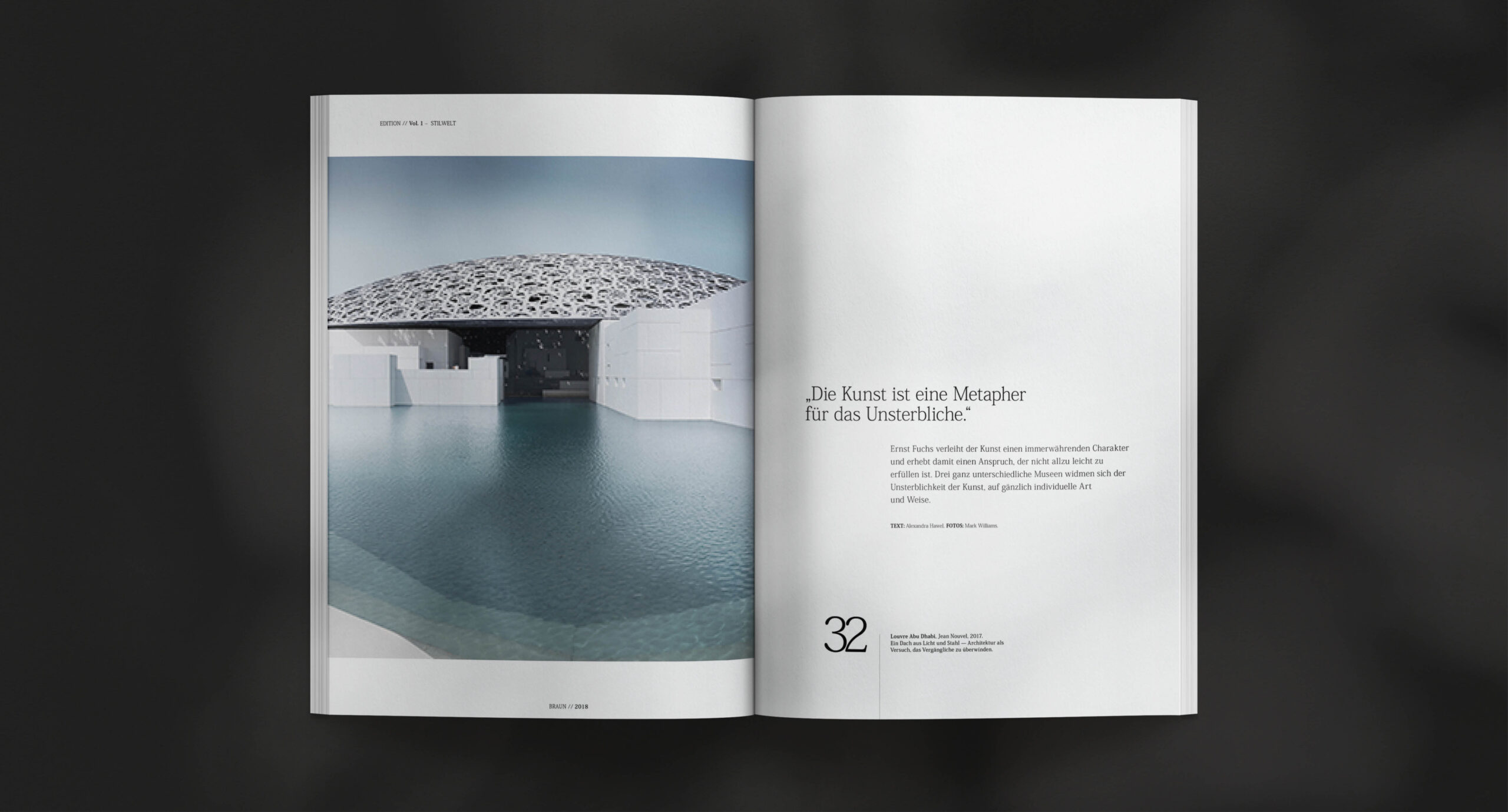
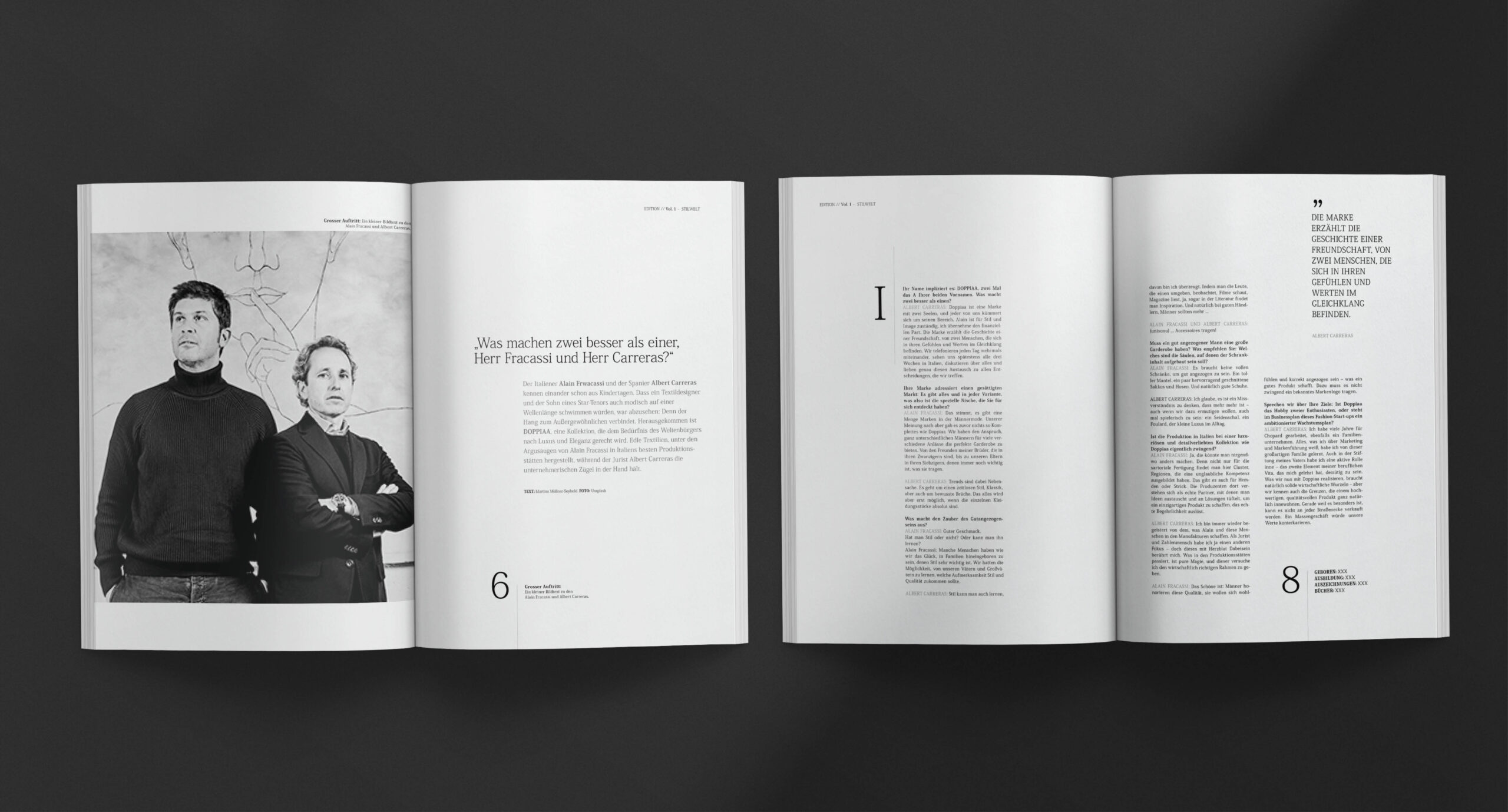
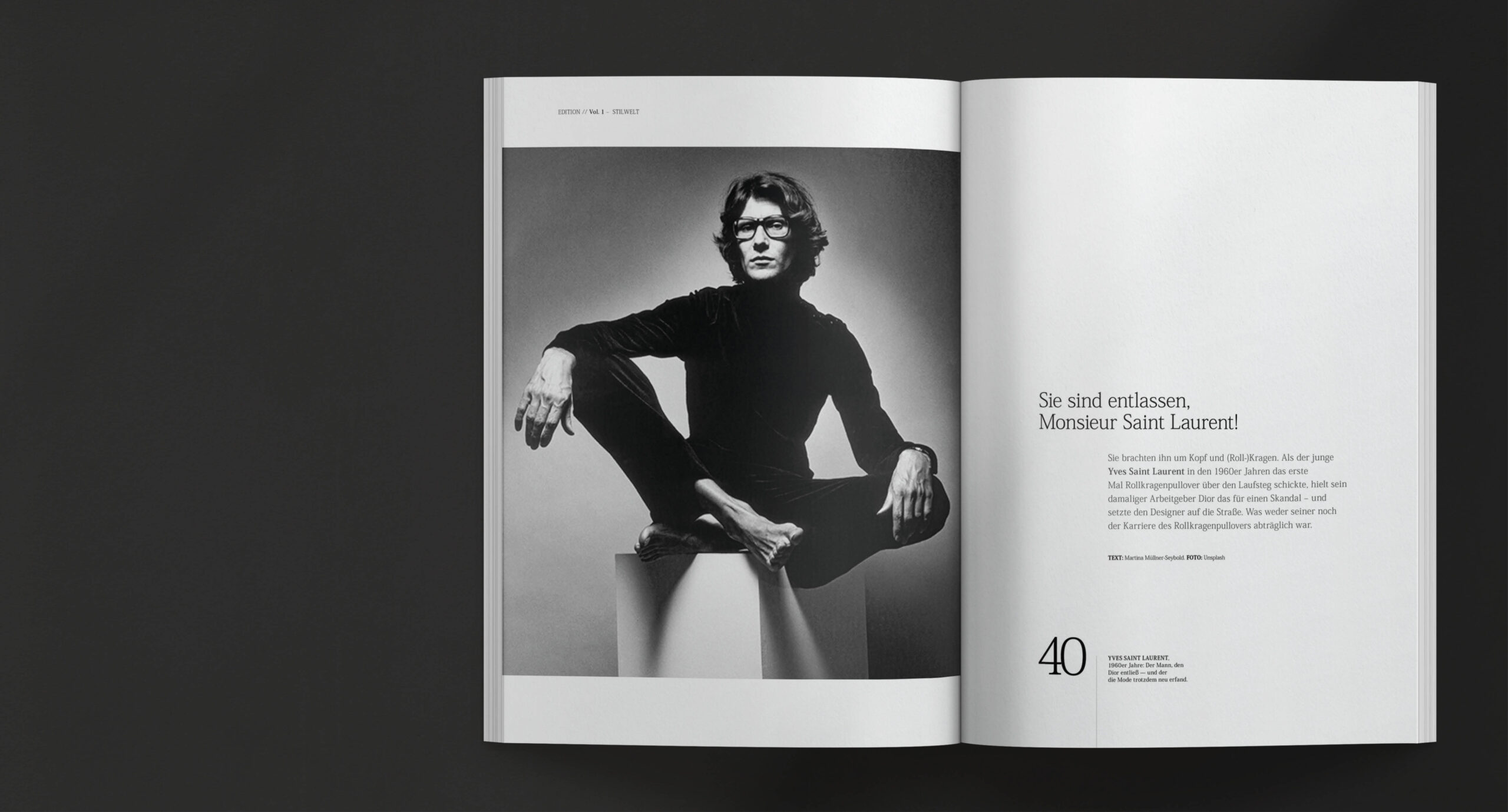
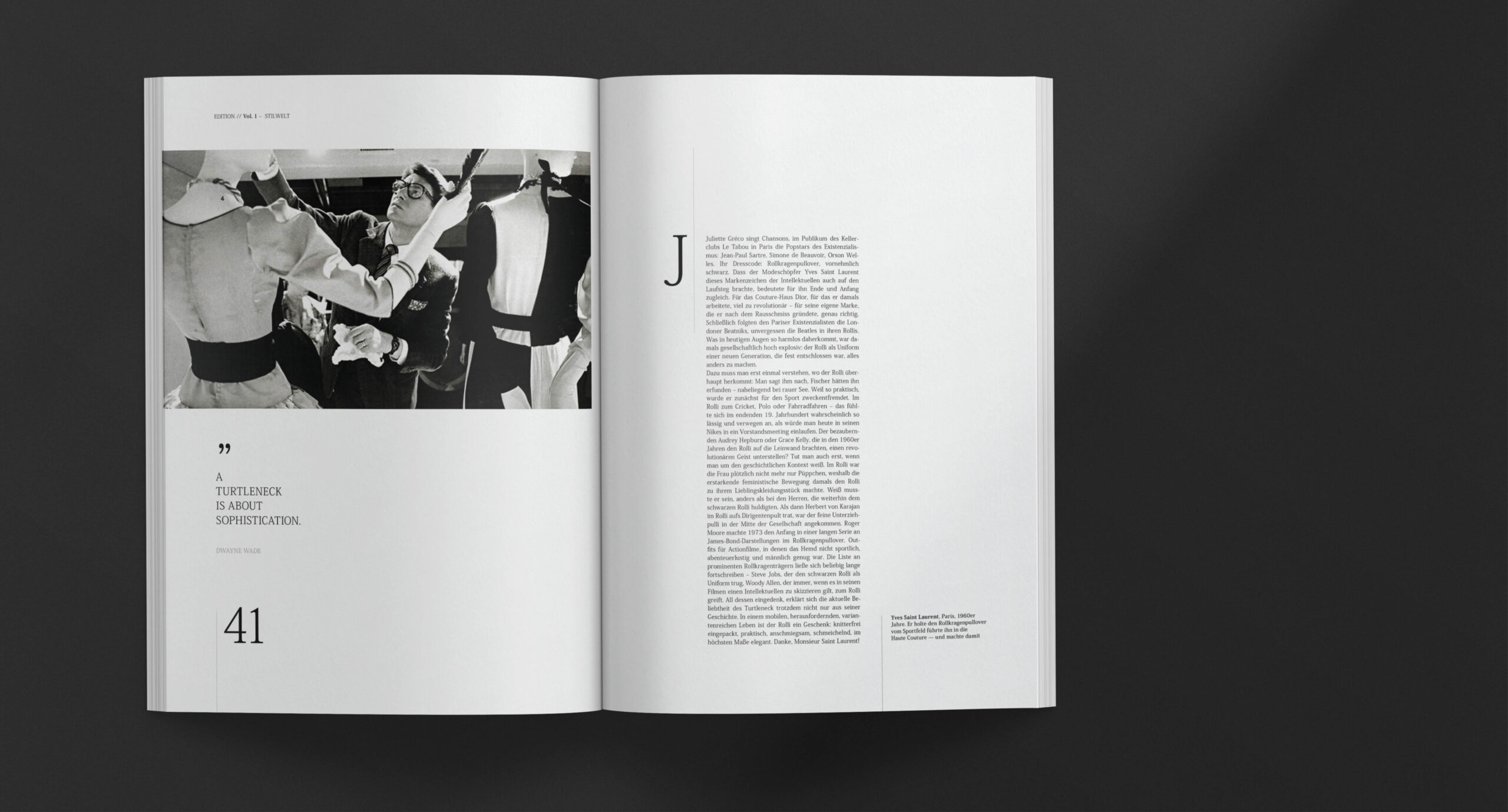
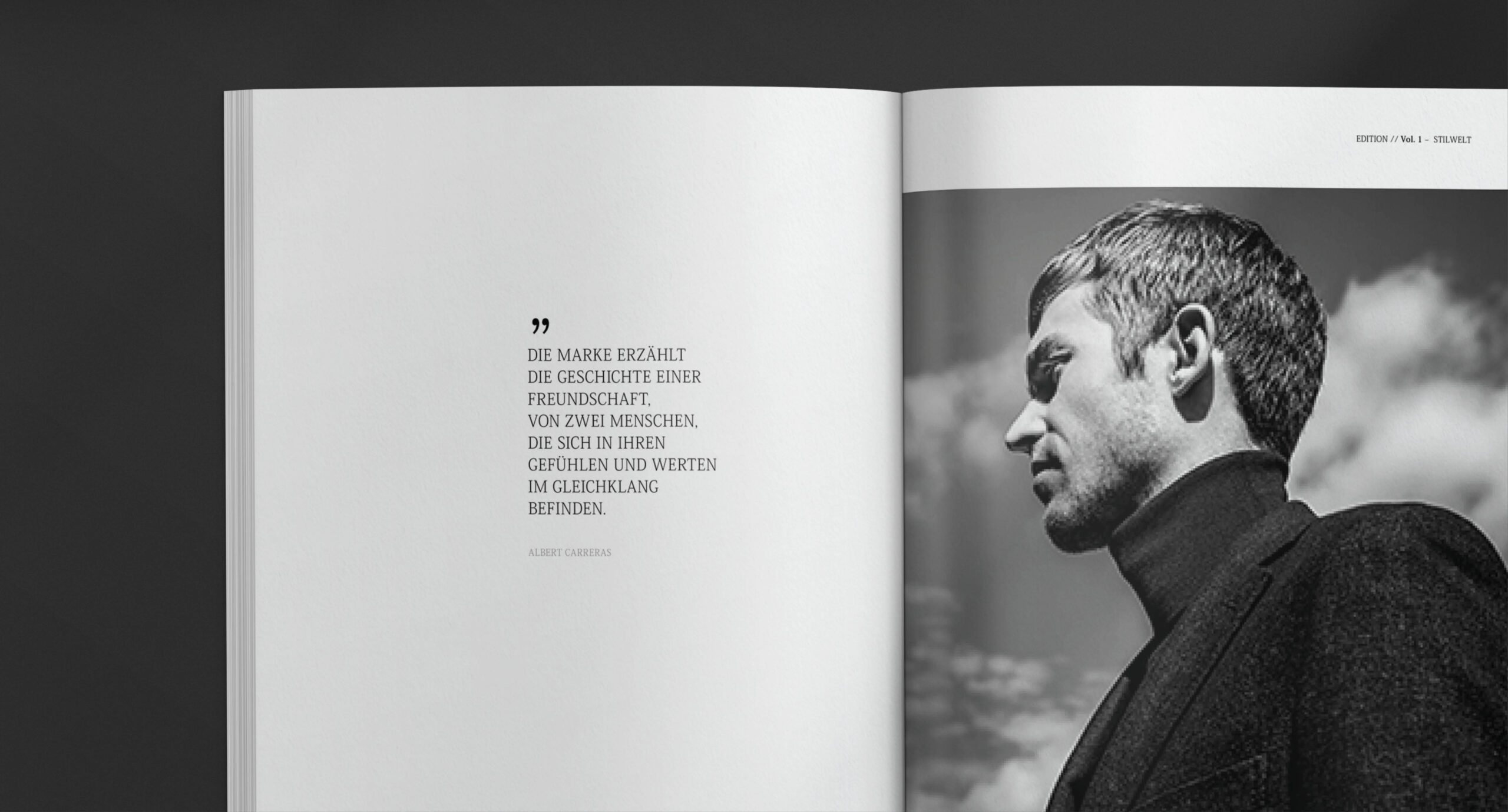
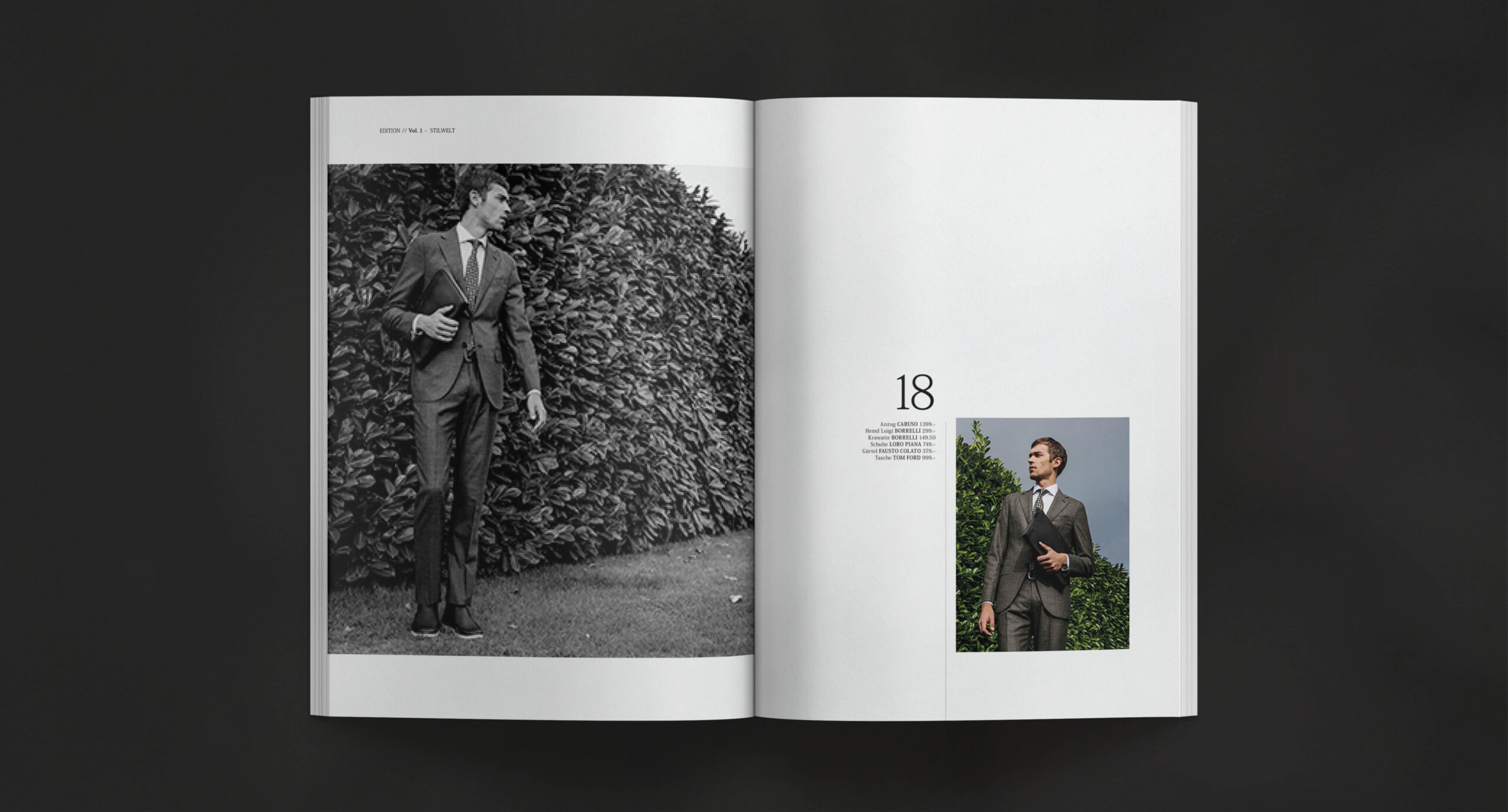
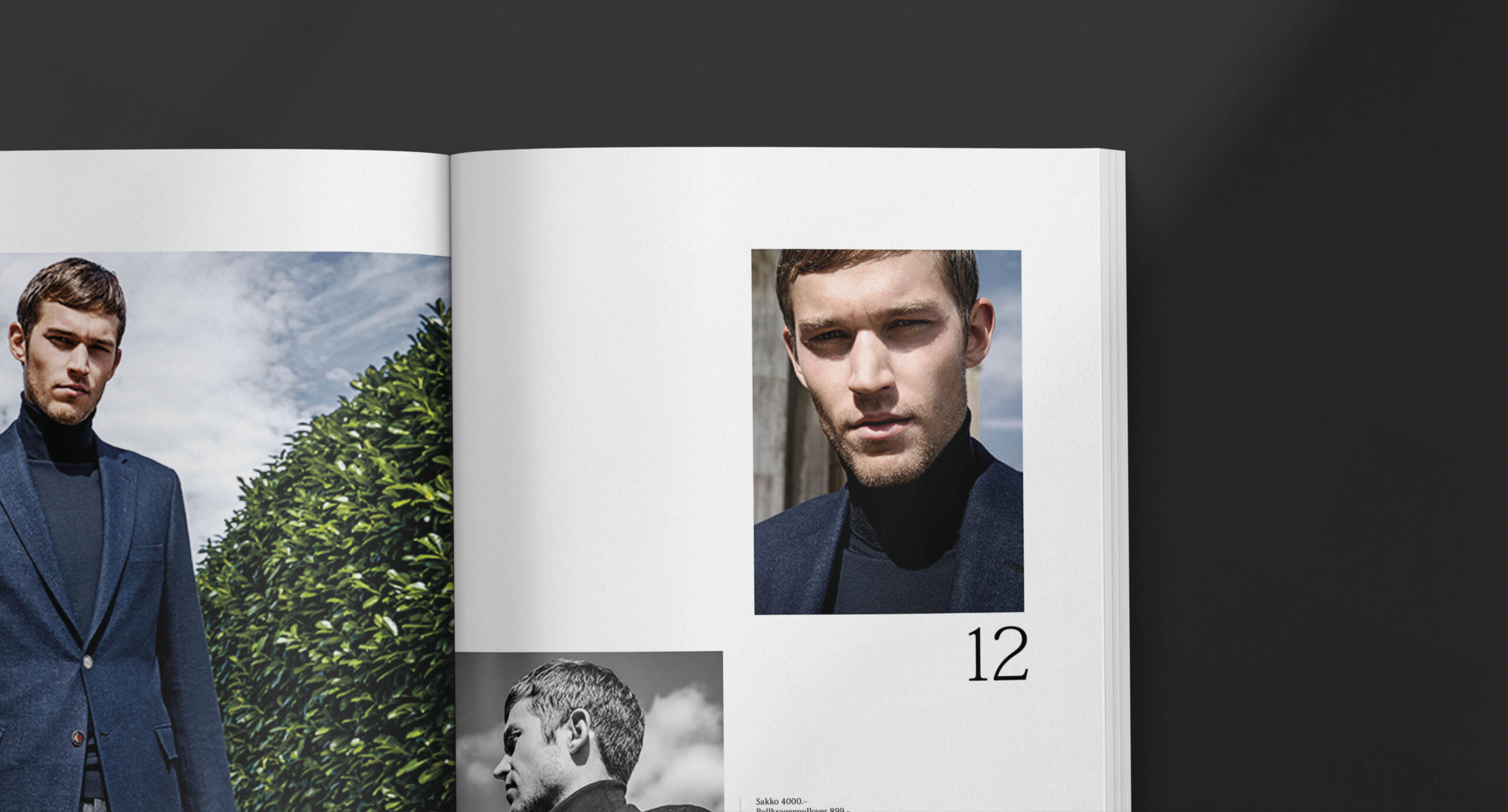
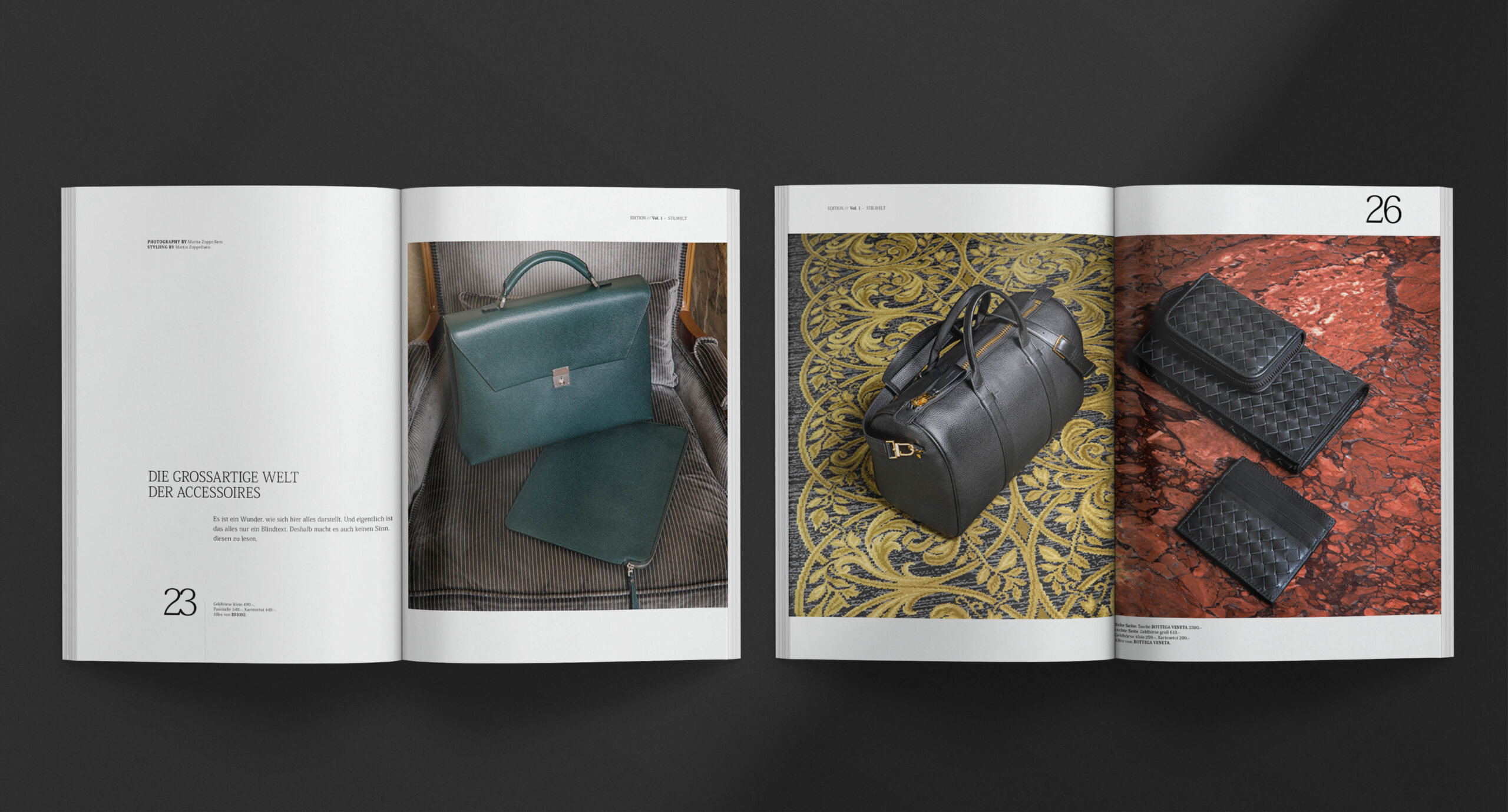
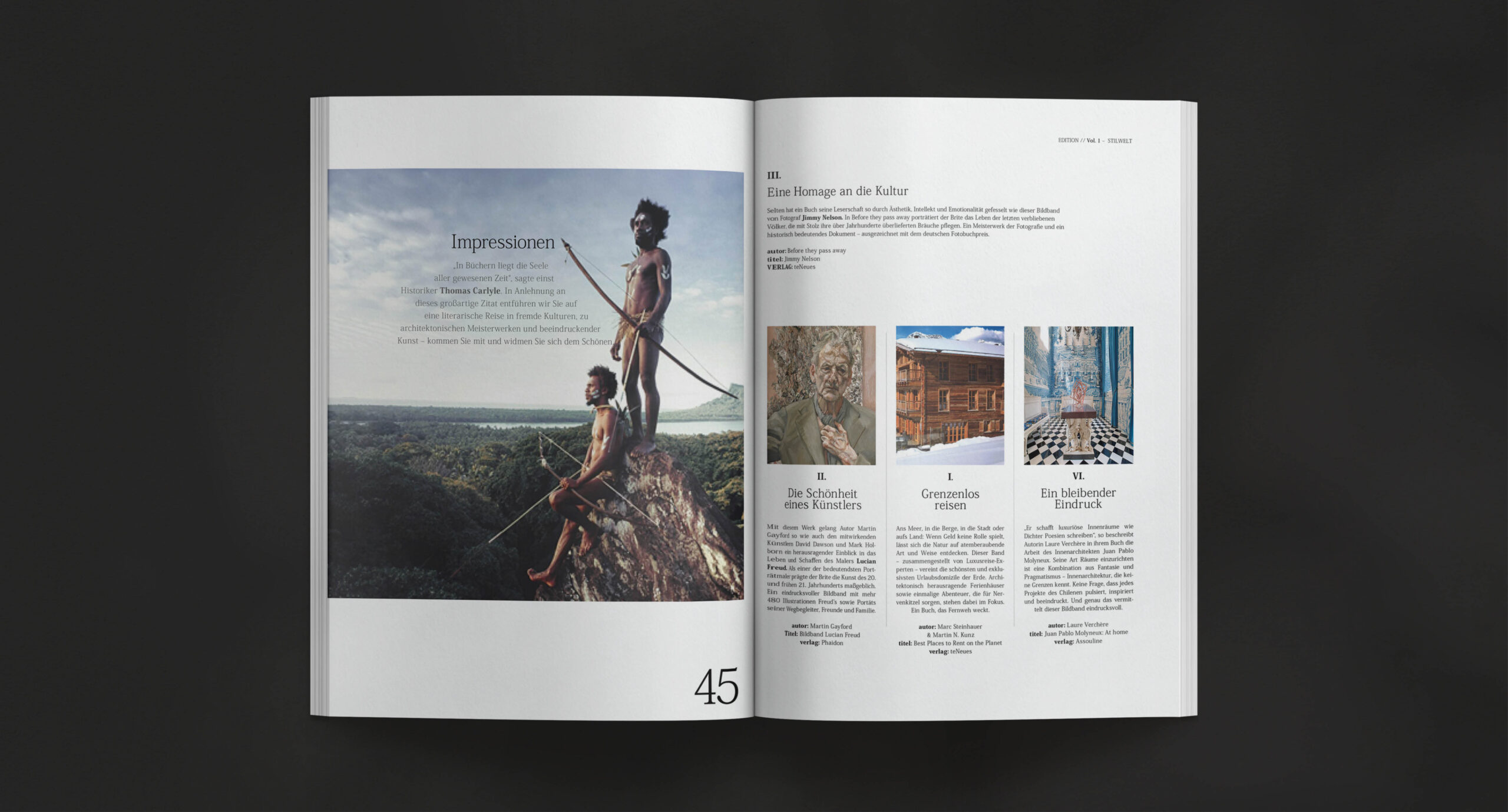
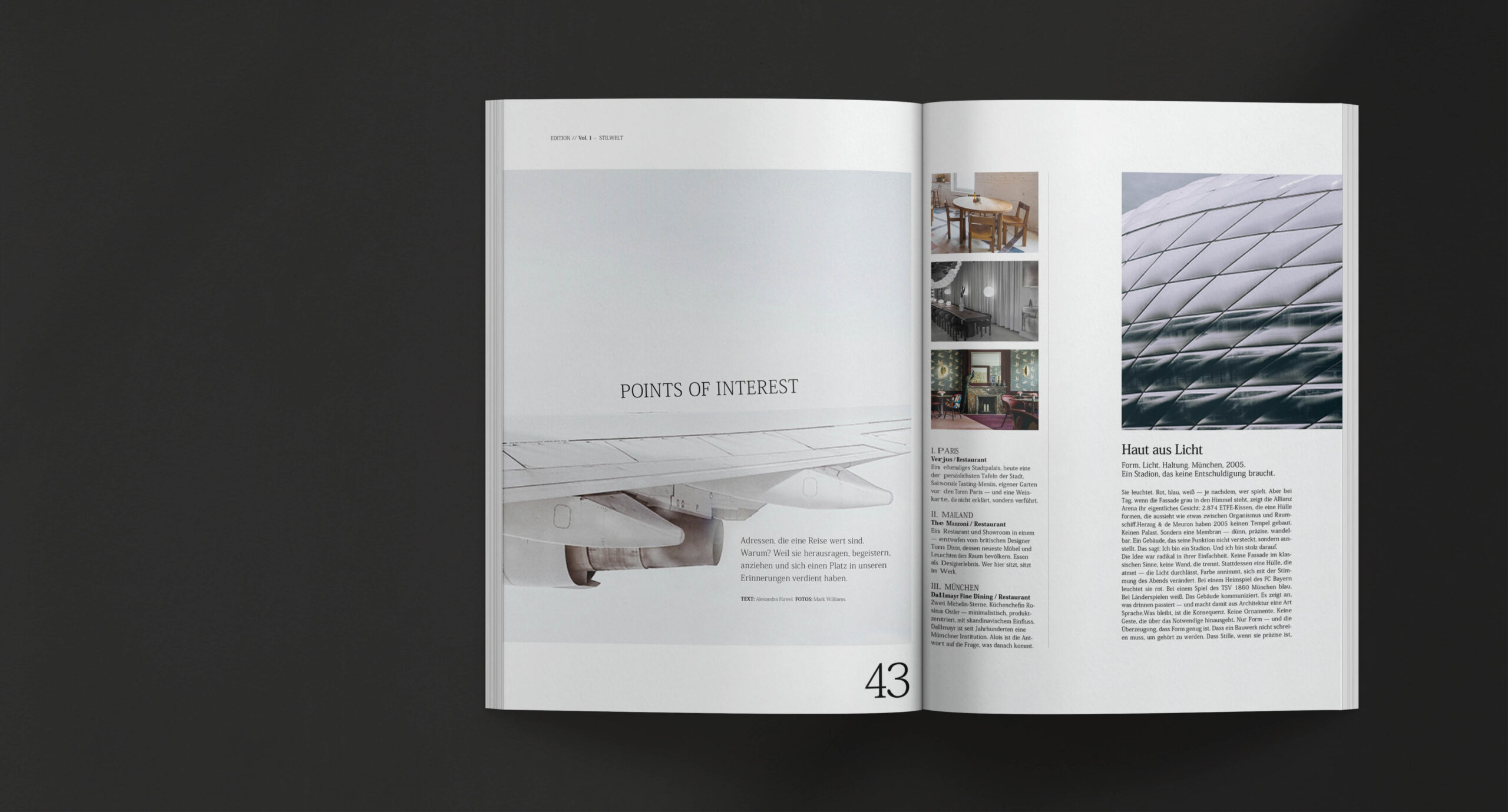
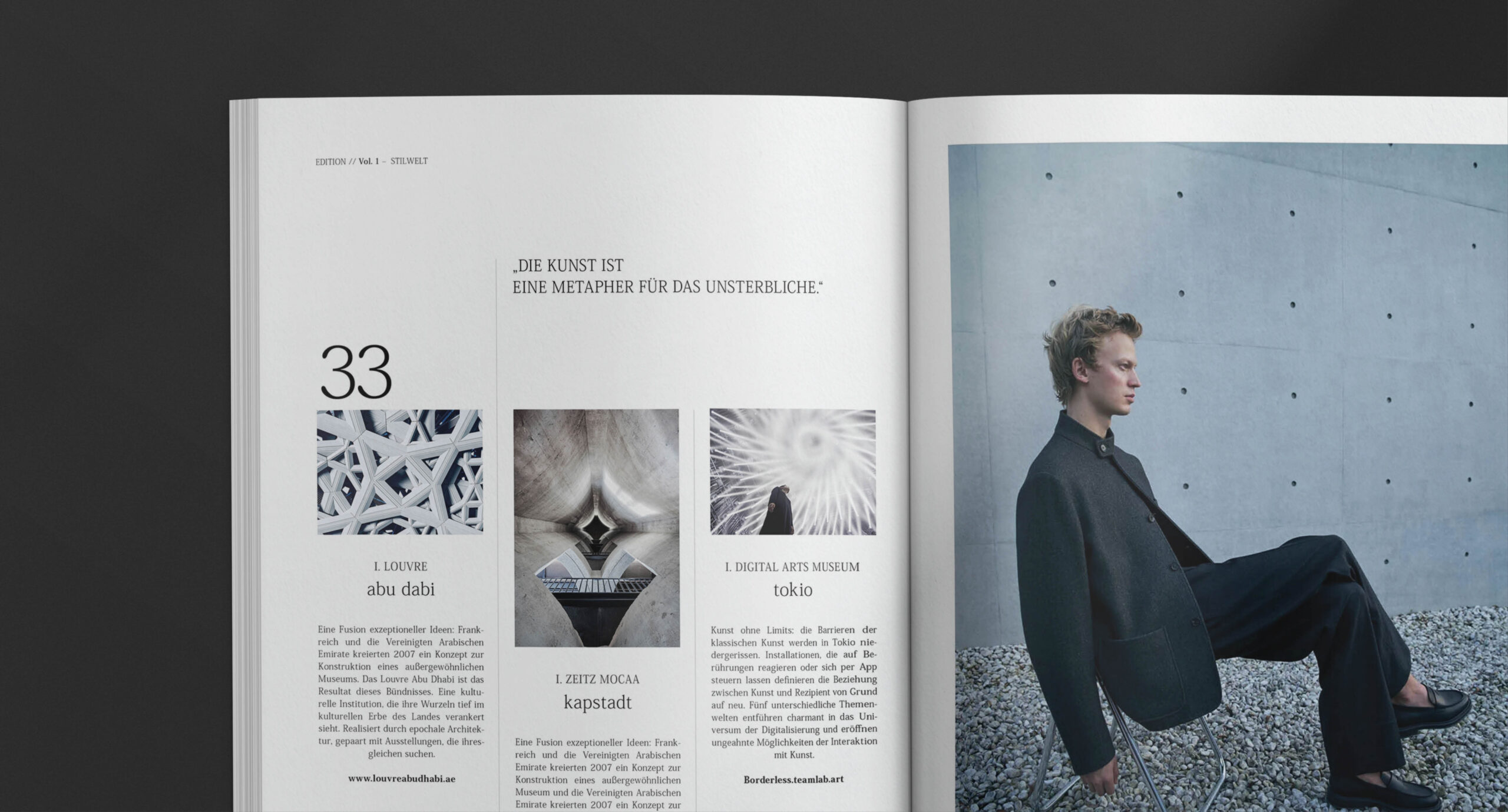
The central decision was typographic and structural simultaneously: to design a publication that held editorial and commercial content within the same visual grammar, rather than separating them into alternating registers. Most magalogs solve the editorial/catalogue tension by compartmentalising — magazine pages, then product pages, then back to magazine. The reader always knows which mode they are in.
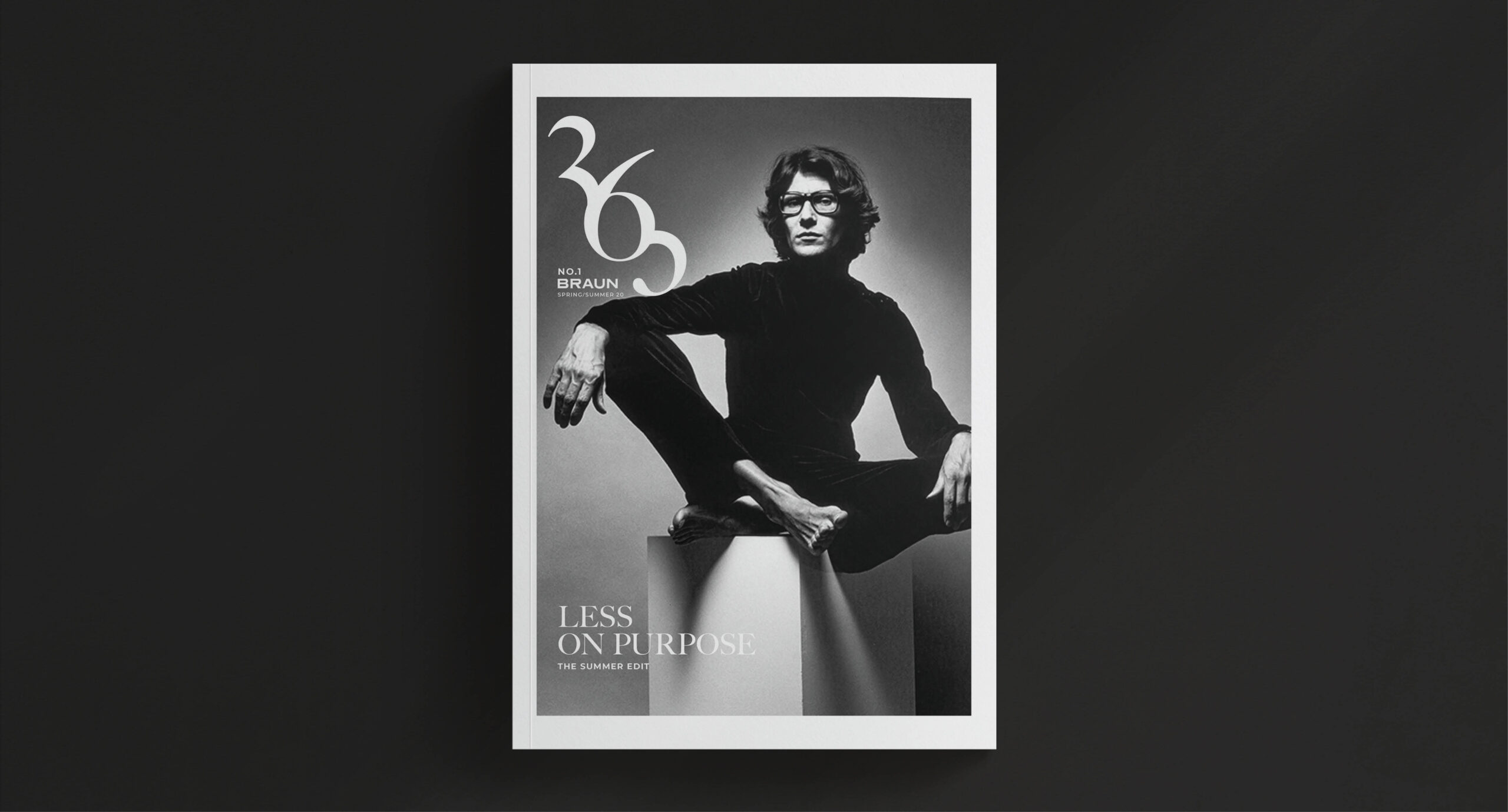
The decision here was to refuse that separation. The typographic system was built to carry both registers without shifting gear: clean enough for product information, weighted enough for editorial authority, modular enough to accommodate a national network of independent clients without losing coherence. Pacing and visual hierarchy — developed through the comprehensive dummy — were calibrated so that the product and the editorial exist in the same visual world, the catalogue becoming part of the essay rather than an interruption of it.
The title treatments carried the same logic: not a masthead that signals fashion magazine, not a cover that signals retail brochure. A visual identity that announced a publication confident enough in its own position to refuse the conventions of both.
THE WORK
Concept development and visual framework for the quarterly magalog. Multiple title treatments and cover concepts. Typographic system and layout principles. Comprehensive dummy establishing structure, pacing, and visual hierarchy across the full publication. Poster design and supporting communication materials for the Masculin retail network — with Braun as the founding member and editorial anchor of the project. Developed as freelance Art Direction in close dialogue with UCM Corporate Publishing.
THE SHIFT
The publication gave the Masculin network something a product catalogue cannot: an editorial voice — a point of view on menswear, on cities, on the particular quality of attention that distinguishes an independent retailer from a department store. For a network whose value proposition is precisely that distinction, a publication that embodies it is not a marketing tool. It is the argument, made visible and legible at the point of sale.
A magalog that reads like a magazine, a catalogue that feels like conviction — that is the rarest outcome in corporate publishing. And the hardest to design for.